
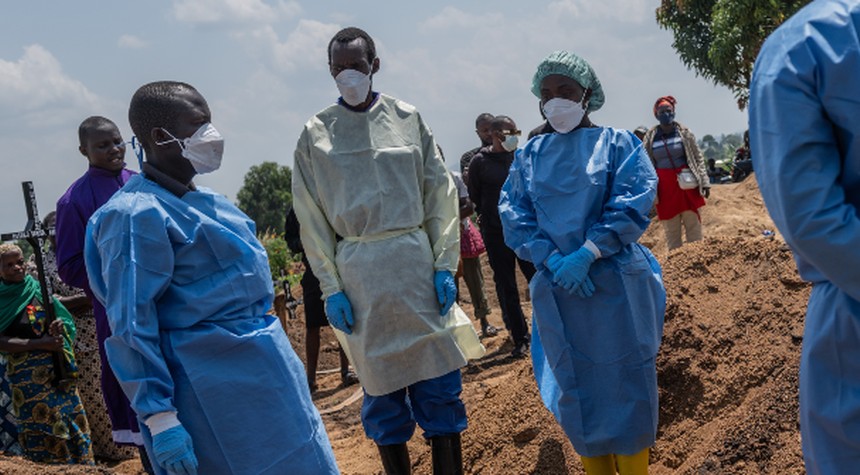
The Democratic Republic of the Congo faces what health officials now characterize as the most lethal Ebola outbreak in recorded history, with confirmed deaths surpassing 1,000 just two months after international health authorities declared a public health emergency.
African health officials reported Wednesday that 1,031 deaths have been linked to the ongoing outbreak of Ebola Bundibugyo, a particularly concerning development given the outbreak’s rapid progression and the unique challenges facing containment efforts in the region.
The outbreak centers in the Democratic Republic of the Congo’s eastern provinces of Ituri and North Kivu, territories long plagued by instability and violence. These regions have witnessed a surge in cases since early this year, with the World Health Organization’s director-general suggesting in June that the outbreak may have originated as far back as January. The international health body formally declared an outbreak of high concern in May.
As of Wednesday, Congolese authorities documented 2,473 cases of Ebola Bundibugyo believed connected to this outbreak. Among confirmed cases, 999 patients had died, yielding a mortality rate approaching 40 percent. However, health officials acknowledge this figure may understate the true toll, as many cases likely remain unidentified in the remote and volatile region. By day’s end Wednesday, the head of the Africa Centers for Disease Control confirmed the death toll had exceeded 1,000.
The severity of this outbreak stems from multiple compounding factors. First, the strain spreading through eastern Congo is Ebola Bundibugyo, a previously uncommon variant of the virus. Unlike more familiar Ebola strains, no approved treatment, vaccine, or medical intervention currently exists to combat this particular form of the disease.
Second, the geographic epicenter of the outbreak presents extraordinary obstacles to public health response. Eastern Congo remains embroiled in ongoing conflict as competing militias battle for control of illegal mining operations, displacing thousands of civilians and creating conditions where disease surveillance and treatment become nearly impossible.
Perhaps most troubling, local populations have demonstrated significant resistance to international aid efforts. Many community members deny the existence of Ebola entirely, with some attacking healthcare workers attempting to provide treatment or fleeing quarantine facilities. This resistance severely hampers both treatment of the infected and containment of the virus’s spread.
Health officials note that the current outbreak has killed more people at a faster rate than any previous Ebola outbreak on record, a grim distinction that underscores both the virulence of the Bundibugyo strain and the perfect storm of conditions enabling its spread.
The international community now confronts a sobering reality: without effective medical interventions for this particular strain, and facing active hostility from affected populations in a war-torn region, traditional containment strategies may prove insufficient. The coming weeks will test whether international health authorities can adapt their response to these unprecedented challenges before the death toll climbs significantly higher.
This outbreak serves as a stark reminder that in an interconnected world, public health crises in remote regions demand immediate attention and resources, lest they spiral beyond control.
Related: Nile Crocodiles May Soon Patrol Israeli Prisons Holding Hamas Operatives