
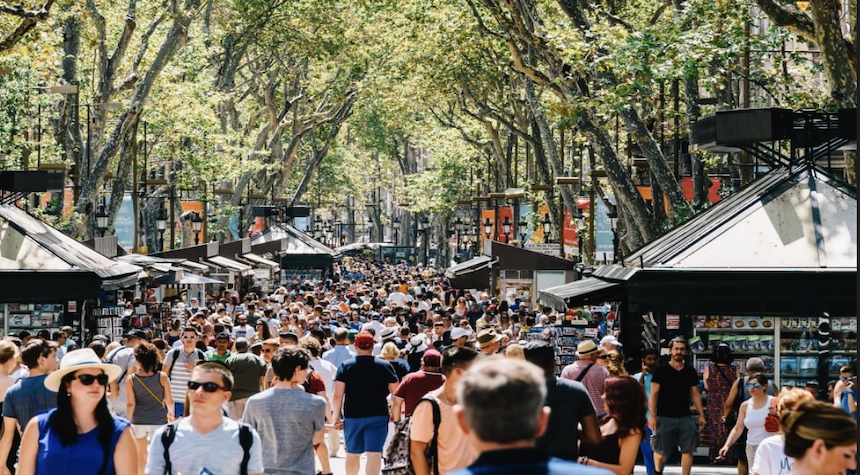
Barcelona, after a summer of anti-tourism protests, is now trying to turn the negative into something positive. It will spend some of the funds raised by the city tax on tourists to address climate change issues.
Barcelona is the most visited city in Europe. For many of Barcelona’s residents, tourism is the cause of several growing problems. These include a housing shortage and rising prices, as well as changing neighborhoods.
Fernando, a resident of Barcelona, said: “The urban fabric has been completely destroyed.” Fernando lives in an area that is known for its bars and restaurants.
This area in particular, you know I’ve been living here for more than 20 years, and it’s slowly becoming soulless. He said that he would estimate 50% of the buildings are only here for temporary purposes, like rentals.
Elizabeth, a Barcelona resident who works in a hotel, said: “If there were more interesting cultural artists and clients like these, it would be better for everyone.” “But the people who only come to the party, drink, and do not take care of the city.” “That is the problem.”
Barcelona, like many other cities in southern Europe, is facing a new problem: the increasing extremes of climate change. In the last few years, there has been a rise in temperatures and an increase in humidity. There have also been dangerous heat waves and draughts.
As the summer heat extends through the school year, the rising temperatures are a concern for the city’s infrastructure, including public schools. Many of these do not have air conditioning.
Mia, a student aged 11 at a Barcelona public school, said she has difficulty concentrating when it is hot.
She said, “It is very difficult.”
Her classmate Theo also agreed.
Theo: “Sometimes, when you’re in class and you’ve just come out playing football, the heat is very intense.”
This year, Mia, Theo, and their classmates will have air conditioning for the first ever time in the school after the system was installed during the summer. The money was raised by Barcelona’s small tourist tax.
Laia Bounet, Barcelona’s deputy mayor, said: “The tourist taxes are what tourists pay in our city when they stay in hotels or touristic apartments.” The possibility of using the revenues from the tourism tax for such a project is important to accept tourism and its role in our city.
Barcelona’s City Hall launched a six-year program to install solar panels and energy-efficient heat pumps in all 170 of the city’s public schools. It is hoped that the new heating and air conditioning systems will reduce carbon emissions while providing air conditioning. The project is estimated to cost around $100 million, which is all financed by the tourist tax, according to the company.
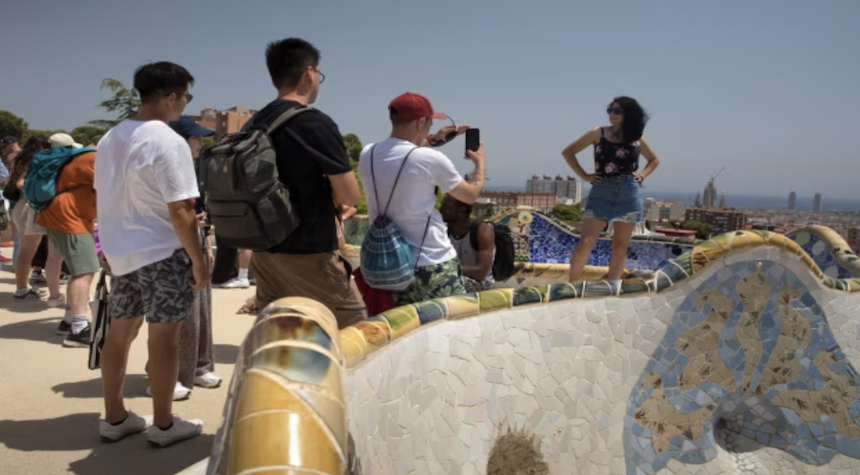
Bonet added that funding the program through the tourist tax is “a very valuable help.”
Bonet stated, “It is the difference.”
Agnes Rodriguez, an anti-tourism activist, says that the city misses the point by using the money collected from tourists.
Rodriguez stated that the government should not rely on tourism to do this. It’s about public health. If you come to Barcelona, Chicago, or New York tonight and stay in a tourist flat where a family would normally live, you’re part of the change. You are affecting people’s lives.”
Rodriguez says residents of Barcelona, and not tourists, are the ones who should be the focus of the fight against climate change.
“We aren’t a theme park. We are not Disney World. We want to continue to be a city, and to be able to reside here,” she said.