
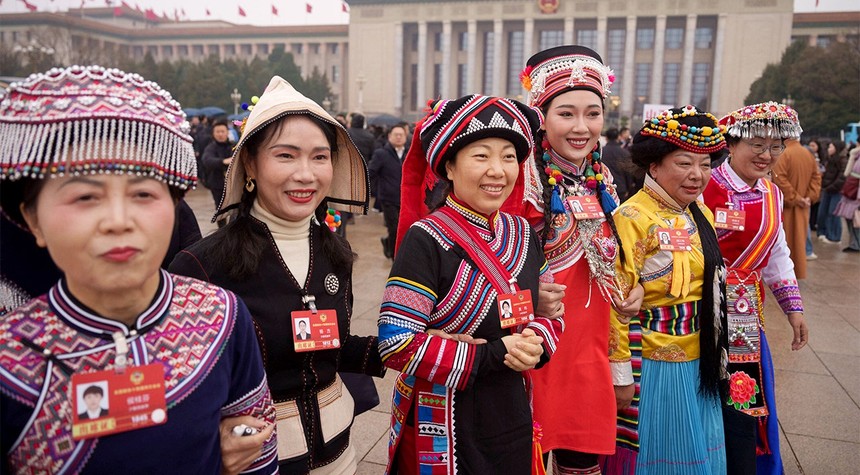
China’s National People’s Congress has passed legislation that grants Beijing expanded authority to enforce ethnic integration across the nation’s diverse populations, a move that raises significant concerns about the future of minority cultures within the world’s most populous authoritarian state.
The “Ethnic Unity and Progress Promotion Law” received approval Thursday during the closing session of the legislature’s annual gathering in Beijing. This formalization of what has been a long-standing but informal policy represents a troubling development for those who value cultural diversity and religious freedom.
According to state media reports, the law codifies into national policy the objective of “fostering a strong sense of community for the Chinese nation.” The legislation aims to promote what Communist Party officials characterize as common prosperity among China’s 56 officially recognized ethnic groups. Additionally, the law mandates accelerated economic development in regions with substantial ethnic minority populations.
The timing and substance of this legislation warrant careful scrutiny. For years, international observers have documented Beijing’s systematic campaign to suppress distinct ethnic and religious identities, particularly among Uyghur Muslims in Xinjiang and Tibetan Buddhists. This new law provides legal justification for policies that many Western governments have condemned as cultural genocide.
The practical implications are deeply concerning. The legislation grants the Communist Party enhanced legal tools to justify its ongoing assimilation campaigns. What Beijing describes as “ethnic unity” often translates into the suppression of minority languages, religious practices, and cultural traditions that have existed for centuries.
The law’s emphasis on “common prosperity” should be understood within the context of China’s authoritarian governance structure. In a nation where the Communist Party controls all aspects of political and social life, such language typically signals increased state intervention rather than genuine economic opportunity.
For ethnic minorities in China, this legislation represents another step in the erosion of their distinct identities. The Uyghurs, Tibetans, Mongolians, and other minority groups have already faced significant restrictions on their cultural and religious practices. This law provides additional legal cover for such policies.
The international community must recognize this development for what it represents: a formalization of cultural suppression under the guise of national unity. The United States and its allies have repeatedly raised concerns about China’s treatment of ethnic minorities, particularly the well-documented abuses in Xinjiang.
As China continues to assert itself on the global stage, its domestic policies regarding ethnic minorities deserve sustained attention. The passage of this law demonstrates that Beijing has no intention of moderating its approach to cultural diversity within its borders.
The world watches as China’s government continues to prioritize Communist Party control over the preservation of distinct cultural identities. This legislation stands as another reminder that authoritarian regimes view diversity not as strength, but as a challenge to be managed through state power.
And that is the situation as it stands tonight in Beijing, where the march toward enforced uniformity continues under the banner of unity.
Related: Three Crew Members Missing After Iranian Attack on Commercial Shipping in Hormuz Strait