
Three commercial vessels came under attack in the Strait of Hormuz on Wednesday, struck by what maritime authorities initially described as unknown projectiles. Iran’s Islamic Revolutionary Guard Corps has since claimed responsibility for at least one of these attacks and threatened a fourth vessel, marking a dangerous escalation in Tehran’s efforts to assert control over one of the world’s most vital shipping lanes.
The first incident involved the Japanese-flagged container ship ONE Majesty, which sustained minor damage while anchored near the United Arab Emirates. The projectile struck above the waterline, causing no operational difficulties and no injuries to the crew.
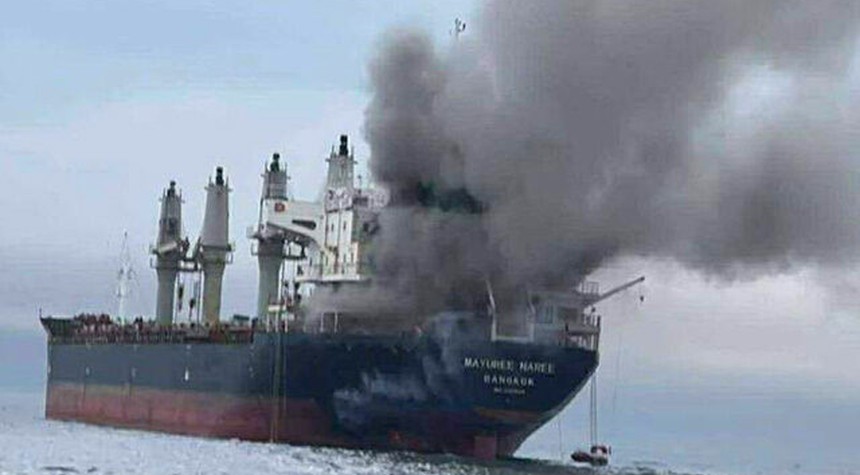
The second and most serious attack targeted the Thai-flagged dry bulk carrier Mayuree Naree. Two projectiles struck the vessel, igniting a fire in the engine room. According to Precious Shipping, the vessel’s owner, three crew members remain missing and are believed trapped in the engine room. The remaining twenty crew members were successfully evacuated to Oman. The Revolutionary Guard has publicly claimed responsibility for this attack.
The third confirmed strike hit the Marshall Islands-flagged bulk carrier Star Gwyneth approximately fifty miles north of Dubai. The projectile impacted near the ship’s hold but caused neither significant damage nor injuries.
In a statement following these attacks, the Revolutionary Guard issued an ominous warning to international shipping. The IRGC claimed that the Mayuree Naree and another vessel identified as the Express Room had “trusted in empty promises, ignored the warnings and intended to cross the strait but got caught.” The statement declared that every vessel intending to pass through the strait must now obtain permission from Iran.
Iranian state media broadcast images of burning ships on Wednesday, though the authenticity and timing of this footage remain unverified. The broadcasts appeared designed to illustrate what Tehran characterized as the consequences of unauthorized passage through the Strait of Hormuz.
The attacks come amid heightened tensions in the region and represent a direct challenge to freedom of navigation through waters that carry approximately one-fifth of the world’s oil supply. Energy Secretary Chris Wright’s social media account referenced successful U.S. Navy escort operations for an oil tanker through the strait just one day before these attacks, suggesting American forces had anticipated Iranian interference with commercial shipping.
The Strait of Hormuz, a narrow passage between Iran and the Arabian Peninsula, serves as the sole sea route from the Persian Gulf to the open ocean. Any sustained Iranian campaign to restrict passage through these waters would have immediate and severe consequences for global energy markets and international commerce.
The fate of the three missing crew members aboard the Mayuree Naree remains unknown. Search and rescue operations continue, though the fire in the engine room has complicated recovery efforts.
This development marks the most brazen Iranian assertion of control over international waters in recent memory and poses difficult questions for the international community regarding freedom of navigation and the security of commercial shipping in a region already fraught with instability.
Related: Military Action Targets Iranian Mine-Layers Threatening Gulf Oil Routes