
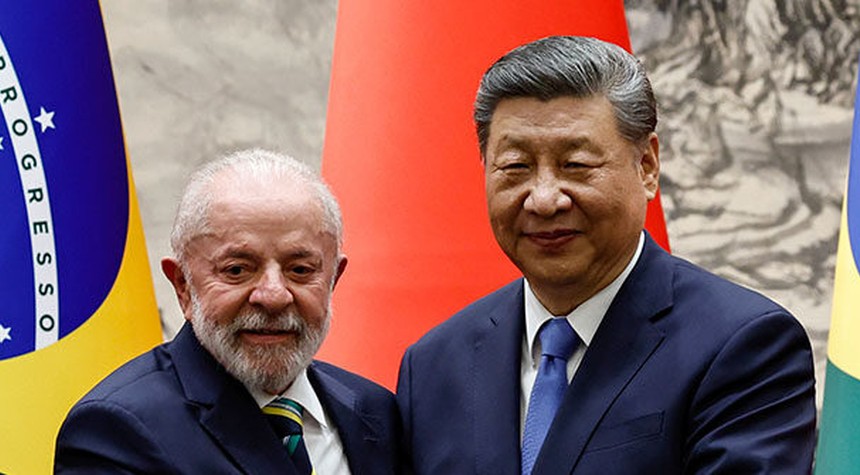
The disruption of oil flows through the Strait of Hormuz has fundamentally altered global energy trade patterns, with Brazil emerging as a principal beneficiary of China’s search for alternative petroleum sources.
Trade between Brazil and China reached $142 billion by September 2026, according to data from the Brazil-China Business Council. This represents a significant milestone in the economic relationship between the two nations, driven primarily by a remarkable 49-percent increase in Brazilian oil exports to Chinese refineries.
The numbers tell a compelling story. Brazil now maintains a $26.1 billion trade surplus with China, bolstered by $21.8 billion in oil sales alone. While soybeans remain Brazil’s largest export to China at 35.4 percent of total shipments, petroleum has rapidly climbed to second position, now comprising 25.8 percent of all Brazilian exports to the Asian economic giant.
China currently purchases half of Brazil’s oil exports, consuming over one million barrels of Brazilian crude daily. During peak periods, these purchases have surged beyond 1.6 million barrels per day. This stands in stark contrast to India, Brazil’s second-largest petroleum customer, which takes approximately 238,000 barrels daily. Nevertheless, Brazilian sales to India have grown substantially, increasing 165 percent year-over-year as part of an overall 28.7 percent rise in Brazilian oil exports to all markets.
The geopolitical dimensions of this trade shift merit close attention. As Persian Gulf oil became less accessible due to threats to commercial shipping in the Strait of Hormuz, Chinese energy planners moved swiftly to secure alternative supplies. Brazil’s petroleum reserves proved particularly well-suited to this purpose, as Brazilian crude is compatible with Asian refinery infrastructure designed to process similar grades of oil.
The economic impact on Brazil has been substantial and timely. The surge in oil revenue provided critical support to Brazil’s economy precisely when Chinese tariffs and import restrictions on Brazilian beef began to bite. Beef exports to China declined 8.5 percent as Beijing implemented protective measures favoring domestic suppliers.
Industry analysts have noted important limitations to Brazil’s capacity to fully replace Persian Gulf production. The country lacks the infrastructure and production capacity to completely substitute for major Middle Eastern exporters. However, the partial shift in global oil trade patterns has proven sufficient to materially benefit the Brazilian economy.
Recent months have seen some recovery in Persian Gulf oil exports as shipping through the Strait of Hormuz increased. This development suggests that Brazil’s oil boom may be moderating. Yet the fundamental vulnerability exposed by the Iranian disruption remains. Should attacks on commercial shipping resume, China may once again turn to Brazilian suppliers as a matter of strategic necessity.
Brazil has not remained passive in this evolving situation. The government has actively courted additional Asian customers, with Japan and South Korea both expressing interest in purchasing larger quantities of Brazilian crude to diversify their own supply chains away from the volatile Persian Gulf region.
Regional dynamics also favor Brazil’s position. Production has declined among South American competitors including Colombia, Ecuador, and Peru, reducing alternative sources of Western Hemisphere petroleum for Asian markets.
The question now facing energy markets is whether Brazil’s enhanced role in global oil trade represents a temporary adjustment or a more permanent restructuring of international energy flows.
Related: Rising Oil Costs and War in Ukraine Trigger Massive Selloff in American Markets