
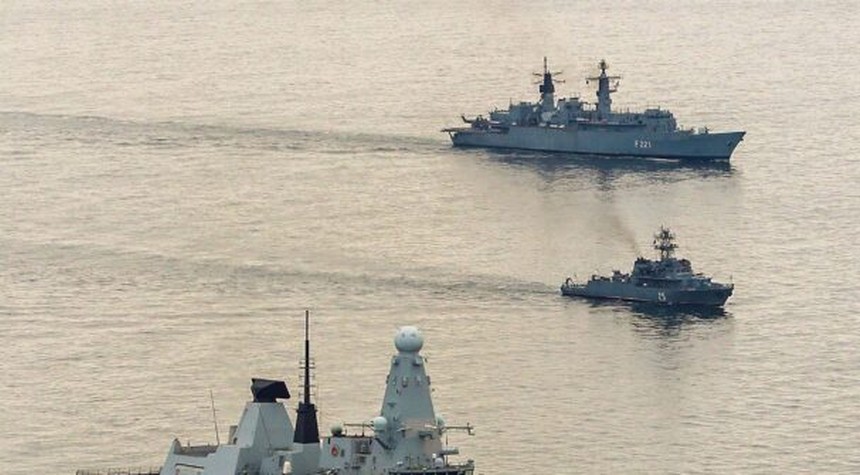
British military officers have taken up positions with United States Central Command as preparations advance for what defense officials describe as a long-term freedom-of-navigation mission through the Strait of Hormuz. The United Kingdom will lead this multinational coalition, though deployment awaits what officials characterize as the right conditions, presumably meaning the cessation of active hostilities with Iran.
High-level meetings have already occurred between defense chiefs from Britain, France, Germany, Italy, the Netherlands, Japan, and Canada. A broader gathering involving approximately thirty nations is scheduled for the coming days, with Gulf states expected to participate. These consultations aim to develop what British defense sources call a viable, collective plan to reopen safe passage through one of the world’s most strategically vital waterways.
The Strait of Hormuz, through which roughly one-fifth of global oil supplies traditionally flow, has become a focal point of international concern during the ongoing conflict. President Trump has consistently emphasized that allied nations must protect their own economic interests by ensuring the resumption of oil shipments through this critical chokepoint.
The question of whether the Strait remains functionally closed is subject to interpretation. American military operations have substantially degraded Iranian capabilities over recent weeks, eliminating much of Iran’s naval fleet, air force, and land-based missile infrastructure. Intelligence assessments suggest that Iranian mining operations, long feared by military planners, have been limited. Reports indicate perhaps a dozen mines present in the entire area, far fewer than the extensive minefields strategists had anticipated Iran might deploy.
Nevertheless, the international shipping industry will not resume operations until clear demonstrations of safety have been established. Commercial vessel operators require more than technical assurances; they demand visible proof that the waters are secure before risking their ships, crews, and valuable cargoes.
British Prime Minister Sir Keir Starmer has maintained his position that Britain will not be drawn directly into the Iranian conflict. The planned coalition mission aligns with this stance, as it will commence only after conditions permit, whether through ceasefire, peace agreement, or the complete exhaustion of Iranian resistance capabilities.
The mission’s scope encompasses clearing any remaining hazards from the Strait, particularly mines, and subsequently providing ongoing security assurance to commercial shipping. This may involve warship patrols standing by in the region or, as circumstances require, more active engagement to guarantee safe passage.
The inclusion of Japan and Canada alongside European powers demonstrates the global nature of the concern. These nations recognize that their economic security depends upon the free flow of commerce through this narrow passage between the Persian Gulf and the Gulf of Oman.
The British officers now embedded with CENTCOM represent the initial phase of coordination for what promises to be a complex international undertaking. Their presence signals that while Western nations are not rushing precipitously into deployment, neither are they ignoring the imperative to restore normal maritime commerce.
And that is the situation as it stands this evening. The pieces are being positioned for an international effort to guarantee what has been taken for granted for decades: the free passage of commerce through one of the world’s essential maritime corridors.
Related: Investigation Confirms American Guided Weapon Hit School Building in Southern Iran