
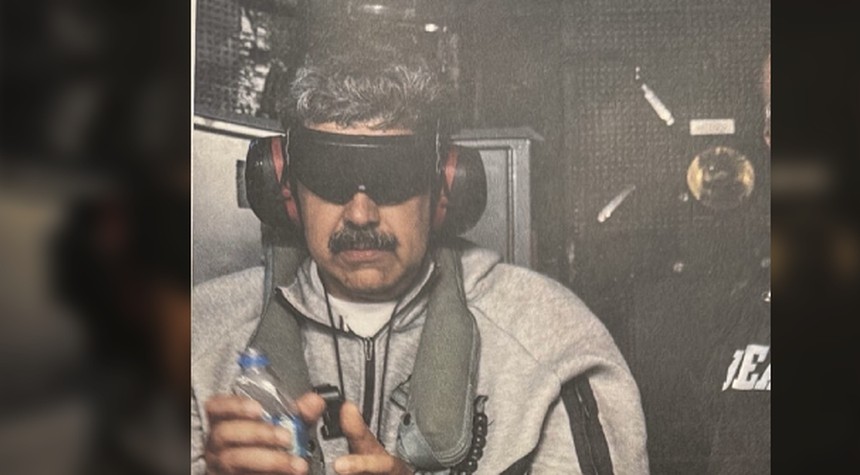
Cuba’s communist government has declared a two-day period of national mourning following the deaths of 32 Cuban military personnel during the weekend U.S. law enforcement operation that resulted in the capture of Venezuelan dictator Nicolás Maduro.
The casualties represent a significant blow to the Castro regime’s long-standing military presence in Venezuela, an arrangement that has sustained both socialist governments for decades through mutual support and shared ideological commitments.
According to Granma, the official publication of Cuba’s Communist Party, the deceased military personnel were operating in Venezuela under official deployment orders from Cuba’s Revolutionary Armed Forces and Ministry of the Interior. The regime characterized their presence as a response to requests from Venezuelan security agencies, though such deployments have long served to prop up Maduro’s authoritarian rule.
The mourning decree, signed by Miguel Díaz-Canel, Cuba’s figurehead president, establishes the observance period from Monday morning through Tuesday evening. In statements released through official channels, Díaz-Canel claimed the Cuban forces were protecting Maduro and his wife, Cilia Flores, characterizing the American servicemembers involved in the operation as “terrorists in imperial uniforms.”
The relationship between Havana and Caracas has proven mutually beneficial for both regimes over many years. Beginning with Hugo Chávez and continuing under Maduro, Venezuela has provided crucial financial support to Cuba’s struggling economy, primarily through discounted oil shipments. In exchange, the Castro regime has deployed security personnel and advisors who helped reshape Venezuela’s intelligence and military apparatus into an instrument of political repression.
Multiple investigations over the years have documented how Cuban advisors assisted in transforming Venezuela’s security services, implementing surveillance systems and interrogation techniques that have been used against political opponents and civil society organizations.
President Donald Trump acknowledged the Cuban casualties during remarks this weekend, though he indicated uncertainty about the precise number of deaths among Cuban and Venezuelan forces. The President noted the ironic reversal of fortunes for the Cuban military, which had long served as Maduro’s praetorian guard.
“Cuba was always very reliant on Venezuela. That’s where they got their money, and they protected Venezuela, but that didn’t work out too well in this case,” the President stated. He added that many Cuban personnel lost their lives during the operation, describing their deployment to protect Maduro as a miscalculation.
The loss of 32 military personnel represents a substantial setback for Cuba’s foreign military operations. More significantly, Maduro’s capture threatens to sever the financial lifeline that has sustained Cuba’s economy through Venezuela’s oil wealth. Without Venezuelan support, the Castro regime faces renewed economic pressure and potential instability.
The operation also demonstrates the risks inherent in Cuba’s strategy of deploying military forces abroad to maintain allied authoritarian regimes. What the Cuban government characterized as heroic resistance appears to have been a decisive defeat against a superior force executing a carefully planned operation.
As Maduro faces justice in the United States, questions remain about the future of Cuba’s military presence in Venezuela and whether the next Venezuelan government will maintain the costly security arrangement that has benefited both socialist regimes for so long.
Related: Australia Calls for Diplomatic Resolution Following US Military Action in Venezuela