
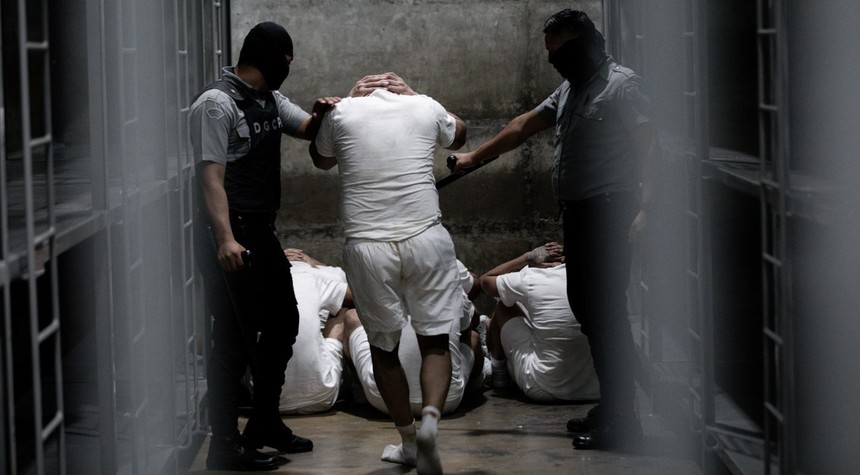
A scheduled “60 Minutes” report examining the deportation of asylum seekers to a maximum-security Salvadoran prison has become the center of controversy after CBS News delayed its broadcast in the United States, even as the segment aired in Canada through Global Television Network.
The report, titled “Inside CECOT,” investigates the Center for the Confinement of Terrorism, a facility in El Salvador where the Trump administration has sent deportees. The segment includes interviews with individuals who described conditions of severe deprivation and abuse at the complex.
Among those interviewed was Luis Munoz Pinto, a Venezuelan college student who traveled to the United States seeking asylum. Munoz recounted his arrival at CECOT with disturbing clarity. According to his account, the facility’s director told incoming deportees they would never see daylight or darkness again, adding a chilling welcome: “Welcome to hell. I’ll make sure you never leave.”
Munoz, who has since been released, stated he was awaiting a decision on his asylum claim when he was deported to CECOT earlier this year. The report indicates he was among 252 Venezuelans sent to the facility between March and April.
The segment featured remarks from President Donald Trump, who praised El Salvador’s prisons as “great facilities, very strong facilities” that “don’t play games” during a White House meeting with Salvadoran President Nayib Bukele. It also included footage of Homeland Security Secretary Kristi Noem visiting CECOT in March, where she thanked Bukele for his partnership with the United States in incarcerating what she termed “terrorists” at the facility.
The decision to delay the broadcast came under the direction of Bari Weiss, CBS’s new editor-in-chief and former opinion writer at The New York Times. This editorial choice has generated internal dissent at the network.
Correspondent Sharyn Alfonsi, who anchored the segment, expressed strong objections to the delay in a note to colleagues. She characterized the decision as politically motivated rather than editorially justified, noting that the story had undergone five screenings and received clearance from both CBS attorneys and Standards and Practices.
Alfonsi’s note raised concerns about the stated reason for postponement: that the Trump administration had not responded to requests for comment. She argued that adopting such a standard would effectively grant government officials a “kill switch” to prevent publication of any story simply by refusing to provide comment.
“It is factually correct,” Alfonsi wrote regarding the segment. “In my view, pulling it now, after every rigorous internal check has been met, is not an editorial decision, it is a political one.”
Neither CBS nor Global Television Network provided comment regarding the situation. The White House and Department of Homeland Security similarly did not respond to requests for comment about the segment’s contents outside regular business hours.
The controversy raises significant questions about editorial independence and the standards governing investigative journalism, particularly when reporting involves sensitive matters of government policy and international cooperation. The fact that Canadian viewers have access to the report while American audiences do not has only intensified scrutiny of CBS’s decision-making process.
As this situation develops, it underscores the ongoing tension between journalistic responsibility to report on matters of public interest and the complex considerations that major news organizations face when covering government actions with potential diplomatic implications.
Related: United States Seizes Second Venezuelan Oil Tanker in International Waters