
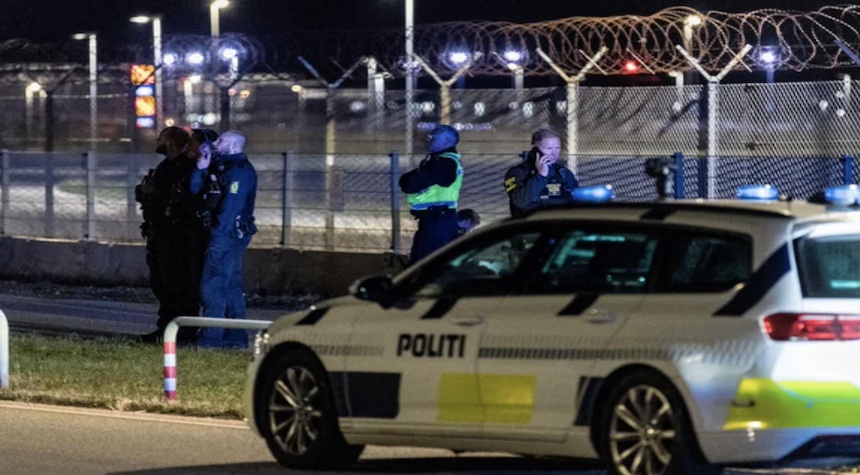
Copenhagen Airport, Scandinavia’s largest air travel hub, experienced significant disruptions due to drone activity in its vicinity. The incident, which began on Monday night, led to the suspension of outgoing flights and the diversion of incoming aircraft to nearby airports.
Two to three large, unidentified drones were observed in the airport’s airspace. Copenhagen Police spokesman Jens Jespersen reported that the operator demonstrated considerable skill, suggesting a capable actor behind the controls. The authorities, prioritizing safety, opted not to attempt shooting down the drones due to the risks posed to passengers, aircraft, and fuel depots in the area.
The airport reopened early Tuesday, though delays and cancellations persisted. Passengers were advised to verify their flight status with their respective airlines. Reports indicate a substantial police presence remained at the scene.
Also Check Out: Fed’s Miran Issues Stark Warning: Thousands Could Lose Jobs Without Rate Cuts
This development follows earlier reports of a similar incident at Oslo Airport in Norway on the same evening, which temporarily restricted operations to a single runway. The connection between these events, if any, remains unclear at this time.

Authorities are investigating how the drones accessed the airport’s restricted airspace, considering both land and sea-based launch possibilities. Of particular note, Jespersen stated that the possibility of this being part of a Russian hybrid attack could not be ruled out.
The significance of this incident should not be overlooked. It comes amid heightened security concerns in northern Europe, following recent Russian drone and warplane incursions into NATO airspace. Polish and allied forces intercepted Russian drones on September 9th, while Estonia reported violations of its airspace by Russian fighter jets ten days later.
This raises important questions about the intentions behind these actions. Latvian President Edgars Rinkevics suggested that Russia may be testing NATO’s response capabilities and attempting to divert Western resources from supporting Ukraine. The Kremlin, through spokesman Dmitry Peskov, has denied these allegations, accusing European nations of escalating tensions.