
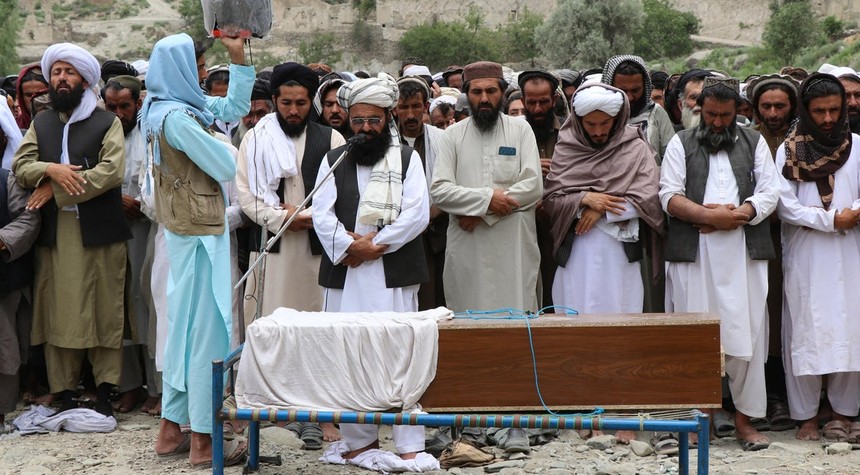
Pakistan conducted military airstrikes deep into Afghanistan early Wednesday morning, marking a significant escalation in a border conflict that has claimed hundreds of lives over recent months and threatens regional stability in South Asia.
The strikes targeted the eastern Afghan provinces of Khost, Kunar, and Paktika, according to Taliban regime officials now governing Afghanistan. This military action breaks more than a month of relative calm between the two nations, raising concerns about the prospects for peace in an already volatile region.
Taliban spokesman Zabihullah Mujahid reported that thirteen people perished in the attacks, including eleven children, one woman, and an elderly man. An additional fourteen civilians sustained injuries, according to the regime’s account. Pakistan’s military, however, characterized the operation differently, describing the strikes as “precise and calibrated” actions against militant infrastructure and hideouts connected to recent terrorist attacks on Pakistani soil. Pakistani officials claimed twenty-six militants were killed in the operation.
Such divergent casualty figures have become characteristic of this conflict, with each side presenting vastly different accounts of the human toll. This pattern complicates international efforts to understand the true scope of the violence and to mediate effectively between the warring parties.
The current cycle of violence traces its origins to late February, when Taliban forces launched a cross-border assault into Pakistan. That attack came as retaliation for earlier Pakistani airstrikes, establishing a pattern of tit-for-tat military actions that has proven difficult to break. Multiple rounds of internationally mediated peace negotiations have failed to produce any lasting ceasefire agreement.
At the heart of this conflict lies Pakistan’s accusation that Afghanistan’s Taliban government harbors and provides sanctuary to militant groups conducting terrorist operations inside Pakistan. Chief among these is Tehrik-e-Taliban Pakistan, commonly known as TTP or the Pakistani Taliban. This organization, while separate from the Afghan Taliban in structure and immediate objectives, maintains close ideological and operational ties with Afghanistan’s ruling regime.
The Afghan Taliban returned to power in August 2021 following the withdrawal of American and allied forces after two decades of war. Since reclaiming control of Afghanistan, the Taliban government has faced international isolation and economic hardship, yet it has also reasserted traditional patterns of regional relationships and rivalries.
Pakistan finds itself in a complex position, having historically maintained connections with the Afghan Taliban while simultaneously facing threats from the Pakistani Taliban operating from Afghan territory. This dual relationship has created diplomatic and security challenges that have only intensified since the Afghan Taliban’s return to power.
The international community watches these developments with concern, recognizing that instability along the Afghanistan-Pakistan border carries implications far beyond the immediate region. Both nations possess nuclear capabilities, and the presence of various militant groups in the border areas presents ongoing counterterrorism challenges.
As this conflict continues, the humanitarian cost mounts, with civilian populations on both sides bearing the consequences of military actions and militant violence. The failure of peace talks thus far suggests that resolution remains distant, leaving the region to face an uncertain future marked by continued hostility between these neighboring nations.
Related: White House Continues to Predict Imminent Iran Deal Amid Diplomatic Deadlock