
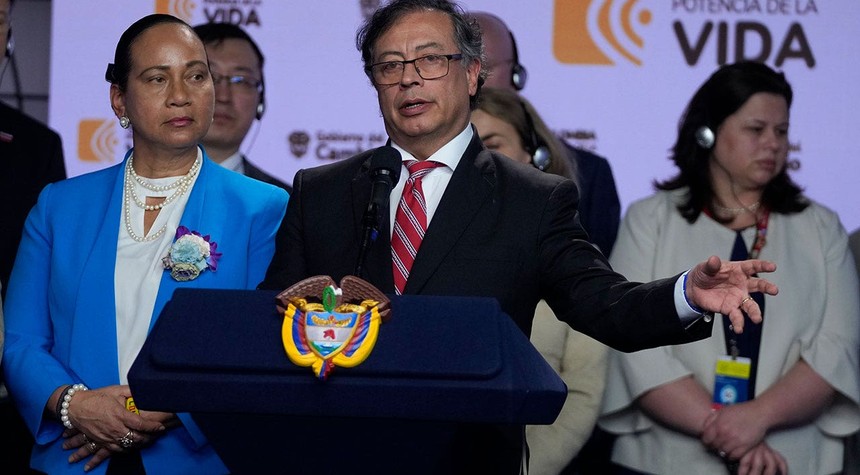
The presidential palace in Bogotá has become the center of a deepening scandal as Colombian officials have accused former President Gustavo Petro of orchestrating a system that allegedly exploited dozens of women under the guise of government contracts.
Carlos Andrés Ríos, director of Colombia’s Administrative Department of the Presidency, testified before congress last week with extraordinary allegations. According to Ríos, Petro oversaw the hiring of 48 women through service contracts who were allegedly brought to the Casa de Nariño, the presidential residence, for purposes unrelated to official government business. The director characterized this as a systematic operation in which public salaries were channeled in exchange for intimate relationships with the former president.
“We are going to prove to the Colombian people how the Casa de Nariño was unfortunately set up, organized, and tailored for something completely different — not to govern, but to party there every single day, bring in women,” Rios stated during his congressional testimony.
These are serious charges against a former head of state, and they warrant careful examination of the evidence. What we know at this hour is that Colombian lawmakers are actively investigating these claims as part of a broader inquiry into Petro’s conduct during his tenure.
Petro has issued a forceful denial of the allegations. In a statement released Sunday, the former president categorically rejected any suggestion that he had used his public office to obtain sexual favors. “I have never given out a contract in exchange for sexual relations. I would vomit on myself if I ever did such a thing,” Petro wrote.
The former president attempted to draw a distinction between the allegations and what he described as legitimate social programs. He argued that his administration had provided state-funded assistance to vulnerable women, including those engaged in sex work, as part of efforts to offer them alternative life opportunities. Petro maintained this was fundamentally different from the conduct alleged by investigators.
In an unusual admission, Petro also acknowledged visiting establishments where sex work occurred during his younger years, stating he regretted those experiences and ceased such visits decades ago.
The timing of these revelations is significant. President Donald Trump recently warned Colombian President Gustavo Petro’s successor not to feel comfortable following American military operations in Venezuela, specifically citing cocaine trafficking from Colombia. The allegations against the former president come as Colombia faces a pivotal election, with Trump-backed candidate seeking to end what critics characterize as the nation’s socialist era.
These developments underscore the complex relationship between the United States and Colombia, a nation that remains central to American concerns about drug trafficking and regional stability in Latin America. The outcome of both the investigation into the former president and the upcoming election will likely have substantial implications for bilateral relations.
The Colombian people deserve answers, and the investigation must proceed with appropriate thoroughness. What remains clear is that these allegations, if proven, would represent a profound betrayal of public trust and the dignity of the presidential office.
Related: Vatican Confirms Papal Trip to Uruguay, Argentina and Peru Will Proceed as Planned