
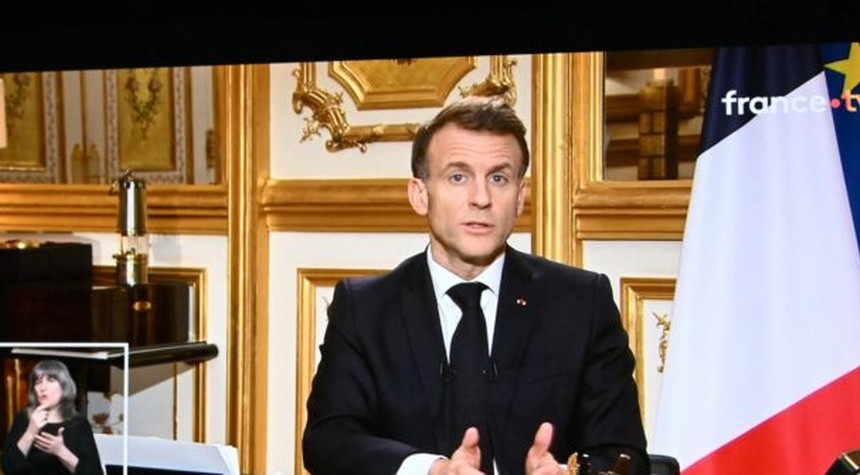
French President Emmanuel Macron delivered a pointed critique of recent American and Israeli military operations against Iran, declaring the strikes to be conducted outside the bounds of international law during a national address to the French people.
The French leader’s statement represents a significant diplomatic rift between France and its traditional Western allies, even as Macron acknowledged Iran’s fundamental role in precipitating the current crisis. His remarks underscore the delicate balance European powers are attempting to maintain in an increasingly volatile Middle Eastern theater.
“The United States of America and Israel have decided to launch military operations, conducted outside of international law, which we cannot approve,” Macron stated in his address. The French president’s characterization of the strikes as legally questionable places Paris at odds with Washington and Jerusalem at a moment when Western unity might otherwise be expected.
Yet Macron was careful to distribute accountability, emphasizing that Iran “bears primary responsibility for this situation.” This measured approach reflects the complexity facing European leaders who must navigate between supporting democratic allies and upholding the international legal frameworks they have long championed.
In a particularly striking passage, the French president appeared to reference the Iranian regime’s brutal suppression of domestic dissent, noting that “history never mourns the executioners of their people.” This statement evidently alluded to the thousands of Iranian civilians killed during recent anti-government demonstrations, suggesting that while France opposes the military strikes themselves, there is little sympathy in Paris for those within the Tehran regime who have fallen.
The French president also issued a warning regarding potential Israeli ground operations in Lebanon, characterizing such action as “a dangerous escalation and a strategic mistake.” This concern reflects broader European anxieties about the conflict’s expansion beyond its current parameters.
Macron further noted that Hezbollah’s initial decision to break existing agreements constituted “a major mistake,” though the article’s conclusion leaves unclear what specific breach he referenced.
The French position illuminates the fundamental tension within the Western alliance regarding the proper response to Iranian aggression. While the United States and Israel have opted for direct military action, France appears to favor a more restrained approach grounded in international legal mechanisms, even when confronting a regime with a documented record of supporting terrorism and suppressing its own population.
This divergence raises important questions about the future of coordinated Western policy in the Middle East. If major European powers refuse to support American and Israeli military operations against Iran, the effectiveness of any broader strategy to contain Tehran’s regional ambitions becomes questionable.
The international community now faces a critical juncture. The strikes against Iran have been executed, and the immediate question becomes whether other European nations will align with France’s position or maintain closer coordination with Washington and Jerusalem. The answer will likely shape not only the immediate crisis but the broader architecture of Western policy in the region for years to come.
What remains clear is that the situation demands careful attention from all parties involved, as miscalculation at this stage could lead to precisely the wider regional conflict that all sides claim to wish to avoid.
Related: China Positioned to Exploit American Focus on Iran as Taiwan Concerns Mount