
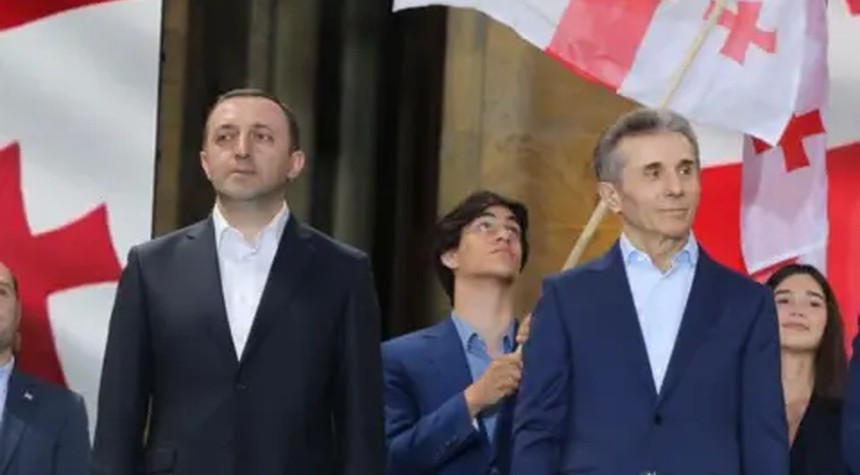
In a stunning development that underscores the deteriorating state of democracy in Georgia, former Prime Minister Irakli Garibashvili has admitted to large-scale money laundering charges after investigators discovered $6.5 million in cash during a raid on his residence.
The facts paint a clear picture of systemic corruption within Georgia’s ruling class. Garibashvili, 43, who served two terms as prime minister (2013-2015 and 2021-2024), now faces up to 12 years in prison. The prosecution’s evidence reveals a pattern of deception where Garibashvili allegedly conducted covert business activities while serving as defense minister and prime minister, subsequently laundering the illegal proceeds through false declarations of family gifts.
This case represents more than just individual corruption – it exemplifies the broader authoritarian shift in Georgian politics under the influence of billionaire Bidzina Ivanishvili and his Georgian Dream party. While Garibashvili once symbolized Georgia’s Western aspirations by signing the EU Association Agreement in 2014, his recent actions tell a different story. He has actively worked to align Georgia with anti-Western forces, forming close ties with Hungary’s Viktor Orban and promoting narratives that blame NATO expansion for Russia’s invasion of Ukraine.
The timing of these charges cannot be ignored. They come as Georgia’s ruling party deliberately derails the nation’s EU integration prospects, suppresses civil society, and imprisons opposition leaders. The government’s November 2024 decision to halt EU membership talks sparked ongoing protests, demonstrating the clear disconnect between the ruling elite’s objectives and the Georgian people’s Western aspirations.
Political analyst Ghia Nodia suggests these developments stem from Ivanishvili’s growing paranoia about potential betrayal within his inner circle. The prosecution of Garibashvili, once Ivanishvili’s most trusted lieutenant, signals a dangerous consolidation of power that threatens Georgia’s democratic institutions.
The facts speak for themselves: Georgia is witnessing the systematic dismantling of its democratic framework. New legislation targeting civil society organizations, independent media, and political opposition has created an environment of fear and repression. The imprisonment of journalists and activists further demonstrates the ruling party’s determination to silence dissent.
Garibashvili’s guilty plea and subsequent release on bail (set at one million Georgian lari, approximately $368,000) represents not just personal corruption but the broader failure of Georgia’s post-Soviet democratic experiment. This case serves as a stark warning about the consequences of unchecked political power and the importance of maintaining strong democratic institutions.
The logical conclusion is clear: without significant reform and a return to democratic principles, Georgia risks complete isolation from the Western community and further descent into authoritarian rule. The question remains whether the Georgian people’s persistent protests can reverse this troubling trajectory.
Related: Constitutional Crisis Looms in Cameroon Following Disputed Election