
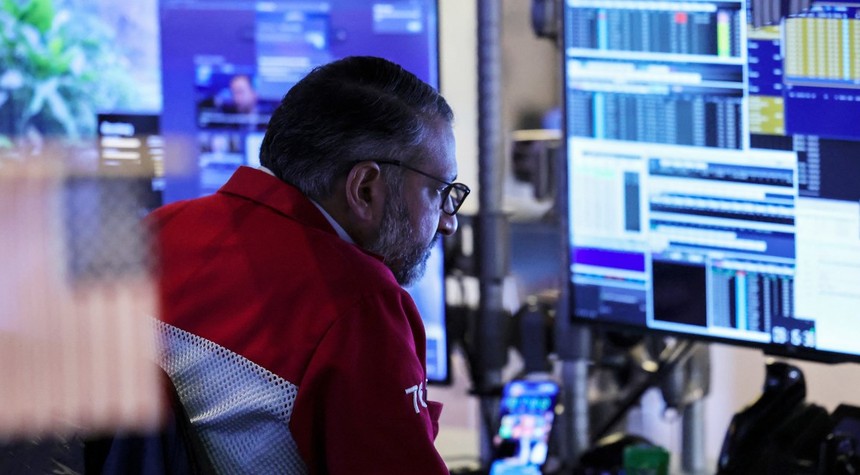
Global financial markets suffered significant losses Tuesday as President Donald Trump intensified rhetoric that has raised concerns about potential trade conflicts with the European Union, America’s largest trading partner by volume.
The market turbulence followed the president’s weekend threat to impose new tariffs on seven European Union member nations and the United Kingdom unless they support American objectives regarding Greenland. When asked Monday whether he would consider using military force to acquire the Danish territory, the president declined to rule out the option, responding only “no comment” during a telephone conversation with reporters.
American stock futures indicated substantial losses before the opening bell. S&P 500 futures declined approximately 1.6 percent, while Nasdaq 100 futures fell 2 percent. The Dow Jones Industrial Average appeared positioned to drop more than 700 points at the market’s opening. Should these futures losses translate to the regular trading session, the S&P 500’s gains accumulated thus far in the year would be eliminated entirely.
Investors simultaneously moved away from U.S. government bonds, a development that pushed interest rates upward. Such increases in Treasury yields typically result in higher mortgage rates and increased costs for personal loans, affecting American consumers directly.
European markets experienced their second consecutive day of sharp declines. Germany’s DAX index fell 1.7 percent, while Britain’s FTSE 100 dropped 1.1 percent. Italy’s FTSE MIB declined 1.5 percent. The STOXX Europe 600, broadly comparable to America’s S&P 500, tumbled 1.3 percent, with nearly all constituent stocks trading lower.
The CBOE Volatility Index, commonly referred to as Wall Street’s fear gauge, reached its highest level since mid-November, reflecting the mounting concerns among investors.
Precious metals, traditionally viewed as safe havens during periods of economic uncertainty, surged to record levels. Both gold and silver advanced more than 1 percent. Meanwhile, the ICE U.S. Dollar Index, which measures the dollar’s strength against major international currencies, fell 1 percent in early trading, positioning it for its worst single-day performance since April, when the president announced his reciprocal tariff agenda.
The president expanded his tariff threats Monday evening while boarding Air Force One in Florida. When questioned about French President Emmanuel Macron’s reported intention to decline participation in a proposed “Board of Peace” focused initially on Gaza, President Trump told reporters he would impose a 200 percent tariff on French wines and champagnes to encourage participation. France’s CAC 40 stock index subsequently declined approximately 1.2 percent Tuesday.
Bond markets reflected growing investor anxiety as yields climbed sharply. The yield on the 10-year U.S. Treasury bond reached its highest level since August, while 30-year yields rose to their highest point since September.
Additional uncertainty emerged from Japan, where the Prime Minister announced plans for snap elections. Further complicating the economic landscape is the possibility that the Supreme Court could rule imminently on the constitutionality of the president’s broad, country-based tariff policies.
The confluence of these factors has created what market observers describe as a particularly challenging environment for investors navigating multiple sources of geopolitical and economic uncertainty. The situation continues to develop as markets assess the potential implications of the administration’s trade posture toward traditional American allies.
Related: Iran Watchdog Group Condemns Davos Decision to Platform Tehran Official After Mass Killings