
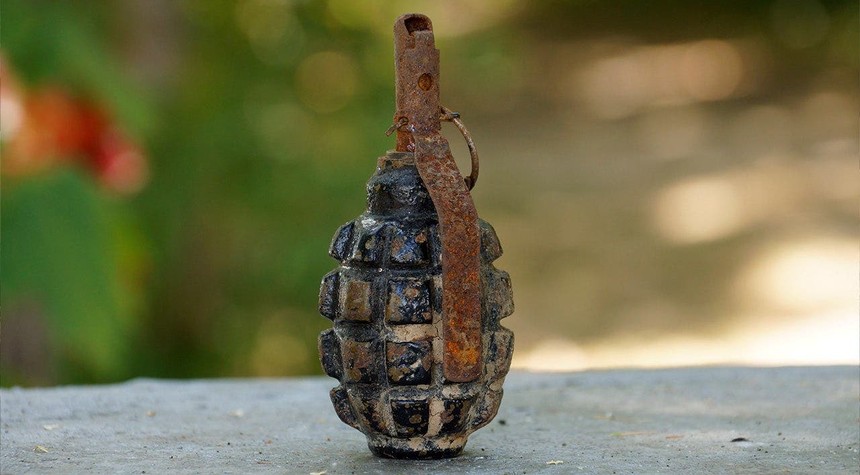
The Ontario Provincial Police in Ottawa found themselves issuing an unusual public safety reminder this month after a civilian transported an unexploded World War II-era hand grenade directly to their detachment office.
The incident, which occurred in early July, prompted authorities to release a statement urging citizens to reconsider such well-intentioned but potentially catastrophic decisions. The police department’s social media post from July 10th was direct in its message: if you discover unexploded ordnance, do not bring it to the police station.
The circumstances raise several questions worth examining. Canada, while a significant contributor to the Allied war effort during World War II, did not serve as a theater of combat operations. The presence of live military explosives on Canadian soil from that era is unusual, though not entirely without precedent. Training exercises, munitions manufacturing, and military storage facilities operated throughout the country during the war years, and occasionally such artifacts surface decades later.
What remains clear is that the individual who discovered the grenade believed they were acting responsibly by delivering it to law enforcement. This impulse, while understandable, represents a fundamental misunderstanding of proper explosive ordnance disposal protocols. The transportation of potentially live explosives through populated areas creates exponentially greater risk than leaving such items undisturbed and summoning trained disposal experts to the location.
Military ordnance, particularly from the World War II era, becomes increasingly unstable with age. Chemical deterioration of explosive compounds can render these devices more sensitive to shock, heat, and movement. What may have required a specific triggering mechanism eight decades ago could potentially detonate from far less stimulation today.
The proper procedure, as authorities emphasized in their statement, involves immediately contacting police from a safe distance and securing the area until bomb disposal technicians arrive. These specialists possess the training, equipment, and protocols necessary to assess, transport, and neutralize such threats with minimal risk to public safety.
This incident in Ottawa serves as a reminder that historical artifacts sometimes carry very real contemporary dangers. The passage of time does not diminish the destructive potential of military explosives. Whether discovered during property excavation, inherited among family possessions, or unearthed in remote locations, such finds demand professional handling.
The Ontario Provincial Police handled the situation appropriately once the grenade arrived at their facility, presumably evacuating the area and summoning explosive ordnance disposal personnel. Fortunately, this particular episode concluded without injury or incident.
For citizens who encounter suspicious objects that may be unexploded ordnance, the guidance remains consistent across jurisdictions: do not touch, do not move, and do not attempt transportation. Mark the location, establish a safe perimeter, and contact authorities immediately. The inconvenience of waiting for specialized response teams pales in comparison to the potential consequences of amateur handling.
That such advisories must be issued speaks to a gap in public awareness regarding the persistent dangers of historical military hardware. As we approach the eightieth anniversary of World War II’s conclusion, remnants of that global conflict continue to surface, requiring vigilance and proper response from those who encounter them.
Related: Trump Administration Blocks Commercial Flights for Americans in Congo Amid New Ebola Case