
The grim reality of Cuba’s military intervention in Venezuela came into sharp focus Thursday as a plane carrying the remains of 32 Cuban state security agents touched down in Havana. The personnel were killed during the American military operation that successfully extracted deposed Venezuelan dictator Nicolás Maduro from power on January 3.
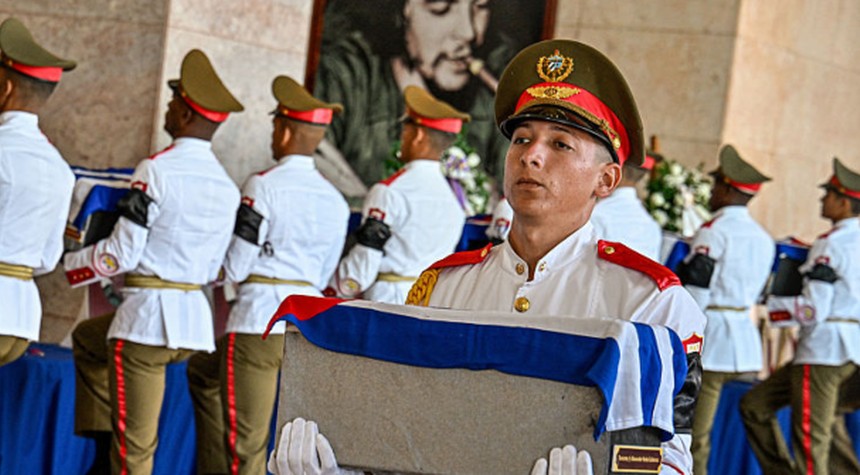
The arrival ceremony, presided over by 94-year-old dictator Raúl Castro in his first public appearance of the year, revealed a disturbing detail that underscored the intensity of the Delta Force operation. The remains of the fallen Cuban agents arrived not in coffins, but in small boxes, their contents too fragmented for traditional military honors.
The United States military operation at the Miraflores palace in Caracas achieved its objective with what Washington described as minimal American casualties and limited collateral damage. The successful extraction of Maduro and his wife, Cilia Flores, known as the “first combatant,” brought an end to more than a decade of authoritarian rule that had devastated Venezuela’s economy and driven millions into exile.
The Communist Party of Cuba confirmed its losses the day following the operation, inadvertently settling a long-standing question about the true nature of Maduro’s security apparatus. For years, both the Maduro regime and Havana had denied reports that Cuban military personnel were operating in Venezuela. The deaths of these 32 agents proved what many had long suspected: Maduro, so deeply unpopular among his own people, had entrusted his personal security to foreign communist forces rather than his fellow Venezuelans.
The Venezuelan socialist regime, which continues to function without Maduro at its helm, has yet to release its own casualty figures from the operation. Interior Minister Diosdado Cabello, himself wanted on drug trafficking charges, offered an explanation Tuesday that painted a picture of significant destruction. He described explosions so powerful that identifying remains had become nearly impossible, with forensic teams working to match DNA from fragmented human tissue.
The scale of the damage, according to Cabello, has left Venezuelan authorities uncertain about the total number of casualties. His description of “little pieces” requiring extensive DNA analysis by multiple state agencies suggests the American operation was executed with overwhelming force.
In Havana, the Castro regime moved quickly to organize nationwide demonstrations, ostensibly to mourn the fallen agents but also to reaffirm Cuba’s commitment to revolutionary activities throughout Latin America. This tradition dates back to Ernesto “Che” Guevara, who met his end in Bolivia while attempting to foment communist revolution there in 1967.
At Friday’s memorial events, Cuban general and Politburo member Lázaro Alberto Álvarez Casas addressed crowds, though the regime’s messaging appeared designed more to shore up domestic support than to threaten retaliation.
The operation marks a significant shift in American foreign policy toward Latin American dictatorships and raises questions about the future of Cuban military adventurism in the region. With concrete proof now established of Havana’s direct military involvement in propping up the Maduro regime, the relationship between these two authoritarian governments can no longer be plausibly denied.
As the small boxes containing Cuba’s “heroes” were carried from the aircraft, the scene served as a stark reminder of the risks authoritarian regimes face when they extend their reach beyond their borders and the resolve of American forces when called upon to enforce the rule of law.
Related: Senate Delegation Meets Danish Officials as Greenland Dispute Deepens