
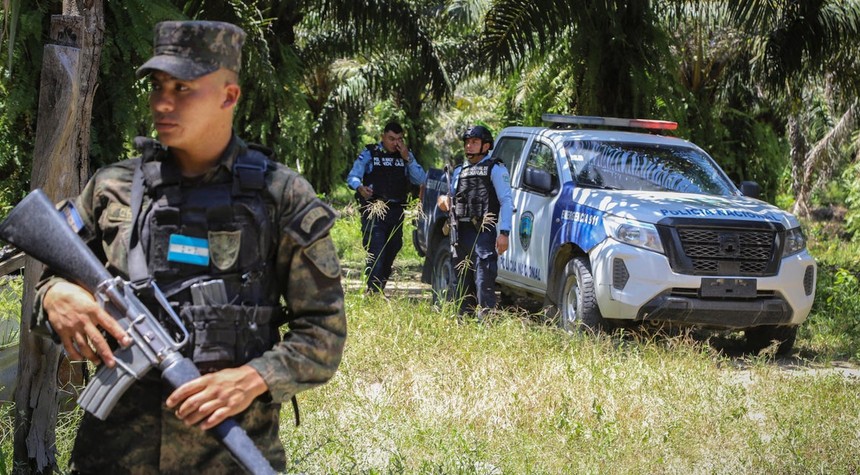
Honduran authorities announced Tuesday the arrest of a man they believe orchestrated the execution of 19 workers at a palm plantation in one of the nation’s most violent regions, marking a significant development in a case that has underscored the security challenges facing Central America.
Carlos Molina, a 27-year-old known by the alias “El Gato Negro,” or the Black Cat, stands accused of planning and providing material support for the massacre that occurred last month in Rigores, located in the volatile Bajo Aguan region. Security Minister Gerzon Velasquez confirmed the arrest to reporters, though he acknowledged that at least six individuals believed to have carried out the actual killings remain at large.
The Bajo Aguan region has long been a flashpoint where rival criminal organizations vie for control of both lucrative palm plantations and drug trafficking corridors. The violence there reflects a broader pattern of instability that has plagued Honduras for years, contributing to migration pressures and regional security concerns.
The mid-May massacre coincided with another deadly incident near the Guatemalan border, where five Honduran police officers were killed on the same day, illustrating the scope of the security crisis confronting the nation.
In response to escalating violence, Honduran lawmakers recently approved sweeping reforms aimed at confronting criminal organizations more aggressively. The country’s homicide rate stands at 24 killings per 100,000 inhabitants, a figure that, while improved from previous years, remains deeply troubling.
The new legislative measures authorize military involvement in public security operations and establish a specialized anti-organized crime unit. Perhaps most significantly, the reforms create a legal framework for designating gangs and drug cartels as terrorist organizations, a classification that carries substantial implications for how these groups are prosecuted and targeted.
This approach aligns Honduras with an emerging regional strategy championed by the United States. In May, Washington designated two prominent Brazilian crime groups as terrorist organizations, setting a precedent that has divided Latin American nations along ideological lines.
Countries governed by center-left leaders, including Mexico and Brazil, have voiced strong opposition to such designations, arguing they represent an overreach that could complicate domestic law enforcement efforts. Meanwhile, nations led by right-leaning governments, such as Ecuador and Honduras, have embraced the approach.
Honduras elected Trump-backed candidate Nasry Asfura as president in December, signaling a shift toward closer security cooperation with Washington. The Asfura administration has demonstrated willingness to work with American counterterrorism frameworks in addressing transnational criminal organizations.
The United States has intensified its engagement across the region. American commandos recently joined Ecuadorian forces in operations targeting a suspected criminal hub operated by an alleged narco-terrorist organization along Ecuador’s coast. Guatemala, while denying reports of agreeing to joint military strikes against drug traffickers, has acknowledged requesting American assistance in combating cartels.
These developments suggest a coordinated effort to apply counterterrorism tactics to the drug war, a strategy that remains controversial but appears to be gaining traction among governments desperate to restore order and security to their territories.
The arrest of Molina represents a tactical victory for Honduran authorities, yet the escape of those who allegedly carried out the killings serves as a reminder of the formidable challenges that remain in dismantling the criminal networks that continue to destabilize Central America.
Related: American Forces Strike Iranian Positions Following Missile and Drone Attacks