
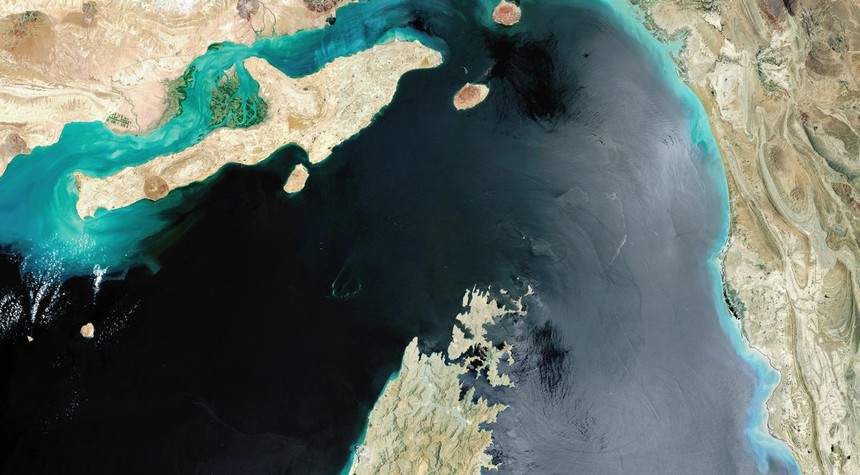
American military forces conducted defensive strikes against Iranian positions on Qeshm Island Tuesday following a series of Iranian drone and missile attacks targeting American interests and allied nations in the Persian Gulf region. The exchange represents the most significant military confrontation between the two nations since a ceasefire agreement took effect earlier this month.
United States Central Command confirmed that American forces intercepted and destroyed three Iranian unmanned aerial vehicles that posed threats to civilian maritime vessels operating in international waters. Iranian forces also launched multiple ballistic missiles at American allies in the region, all of which failed to reach their intended targets, according to military officials.
Three missiles directed at Bahrain were successfully intercepted by air defense systems, while two additional missiles aimed at Kuwait either fell short of their targets or disintegrated during flight. In response to these provocations, Central Command authorized precision strikes against an Iranian ground control station located on Qeshm Island, a strategic position near the Strait of Hormuz.
The Iranian Islamic Revolutionary Guard Corps issued its own account of the incident, claiming its military actions were retaliatory in nature. Iranian officials stated they were responding to an earlier American operation that disabled an oil tanker bound for Iran by targeting its engine room with a missile strike. The Revolutionary Guard asserted it had struck the headquarters of the United States Navy’s Fifth Fleet in Bahrain and what it described as a vessel belonging to American and Israeli interests. Central Command categorically denied these claims, stating unequivocally that no Iranian weapons struck Fifth Fleet facilities.
The current tensions unfold against the backdrop of a fragile ceasefire agreement reached on April 7, which brought a temporary halt to three months of direct hostilities between the two nations. However, sporadic clashes have persisted even as both sides maintain the ceasefire remains technically in effect. Multiple incidents have occurred in recent days, testing the durability of the agreement.
The strategic Strait of Hormuz remains a central point of contention. Iran has implemented restrictions requiring its permission for vessels transiting the waterway, effectively paralyzing commercial shipping through this vital oil corridor. The United States has responded with a naval blockade of Iranian ports and has taken action against vessels suspected of attempting to circumvent these restrictions.
Central Command emphasized its continued readiness to respond to Iranian aggression, stating that American forces remain vigilant throughout the ongoing ceasefire period.
Diplomatic efforts continue simultaneously with these military confrontations. American and Iranian representatives have engaged in indirect negotiations addressing the extension of the ceasefire, the lifting of the American blockade, the reopening of the Strait of Hormuz, and preliminary discussions regarding Iran’s nuclear program. While these talks have not yet produced a comprehensive agreement, administration officials expressed cautious optimism last week about the prospects for progress.
Iranian state-affiliated media reported Monday that Tehran had suspended all discussions with Washington pending a cessation of Israeli military operations in Lebanon, where Israeli forces are conducting an offensive against the Iranian-backed Hezbollah organization.
President Trump disputed these reports Tuesday, characterizing them as inaccurate. The President stated that communications between American and Iranian representatives have continued without interruption, including conversations as recently as Tuesday itself.
The situation in the Persian Gulf remains fluid, with military readiness and diplomatic engagement proceeding on parallel tracks. The international community watches closely as two nations with a long history of antagonism navigate between confrontation and negotiation in one of the world’s most strategically significant regions.
Related: American Forces Strike Iranian Military Sites Following Drone Shootdown