
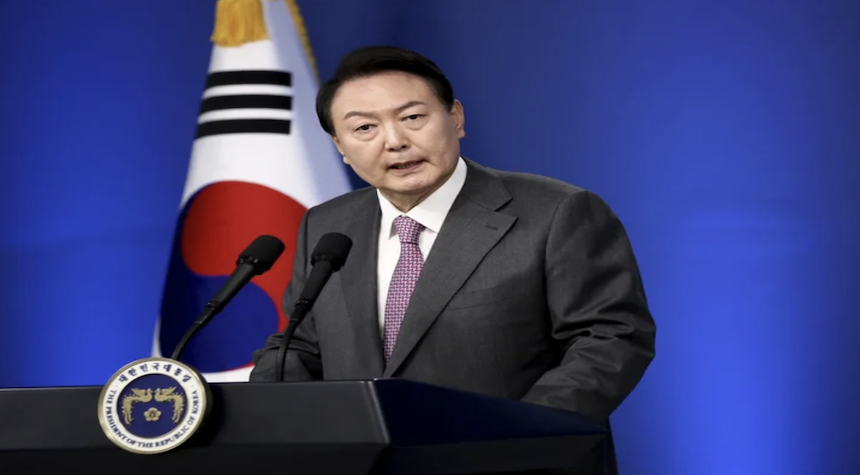
On Wednesday, South Korean law enforcement officials detained impeached president Yoon Suk Yeol for his brief imposition last month of martial law.
Yoon, in a recorded video message before being escorted into the headquarters of an anti-corruption agency pleaded that “the rule of law had completely collapsed” in the country. He said he would comply with the arrest warrant to avoid clashes between the law enforcement officials of the presidential security services and law enforcement officials.
Several black SUVs with sirens were seen leaving the compound of the president under police protection. Yoon’s vehicle was later seen arriving at the Corruption Investigation Office of High-Ranking officials in Gwacheon, a nearby city.
Yoon was taken into custody around three hours after hundreds of law enforcement officers entered his residential compound to try and detain him.
Yoon’s attorneys tried to convince investigators to not execute the detention order, claiming that the president would be willing to appear for questioning. However, the agency refused.
There were no reports of any clashes as the officers approached Yoon’s home.
Yoon has been holed up in his Hannam-dong home in Seoul’s capital for weeks, vowing to fight to the bitter end against those who want to remove him.
He justified the declaration of martial laws on Dec. 3, as a legitimate act to govern against an “antistate” opposition that was using its legislative majority in order to undermine his agenda.
After Yoon ignored multiple summons to be questioned, the anti-corruption agency led a joint investigation along with the police and military to determine whether Yoon declared martial law in an attempt to rebel. They also sought to take him into custody. After the presidential security service blocked initial attempts to detain Yoon on Jan. 3, they have promised more aggressive measures.
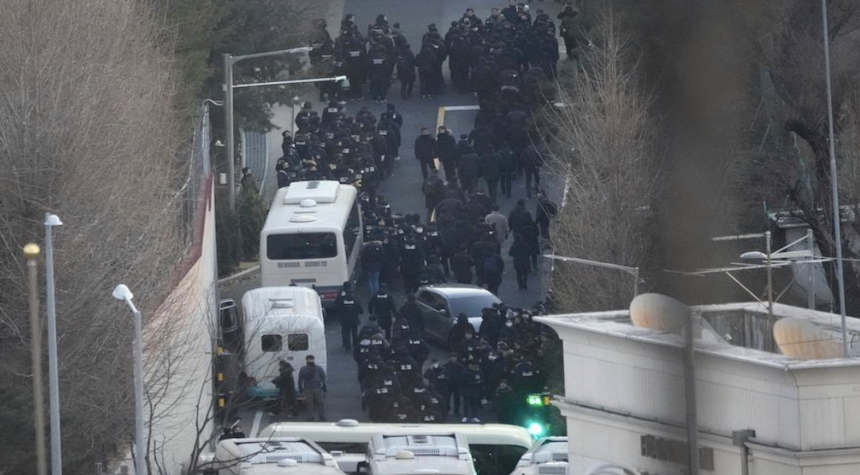
After an hour-long standoff, investigators from the anti-corruption unit and police officers have been seen climbing the hilly compound. Earlier, police officers were seen climbing ladders over rows of buses that the presidential security service had placed near the compound’s entry.
Police and anti-corruption investigators arrived at a metal gate near Yoon’s residence with a presidential gold mark. A few officers, along with Yoon’s lawyer and chief of staff, were seen entering the security door that was on the side of the gate. Later, the presidential security service removed a vehicle and a bus that were parked inside the gate to act as a barrier.
The presidential security service, despite a court order for Yoon to be detained, has maintained that it is obligated by law to protect the impeached President and has reinforced the compound with barbed wire and rows of buses that block paths.
Investigators are likely to ask for a court’s permission before making a formal arrest. He will be released if he is not arrested within 48 hours.
In response to the escalating tensions, South Korea’s acting prime minister, Choi Sangmok, released a statement on Wednesday morning urging law enforcement officials and the presidential security services to prevent “physical clashes.”
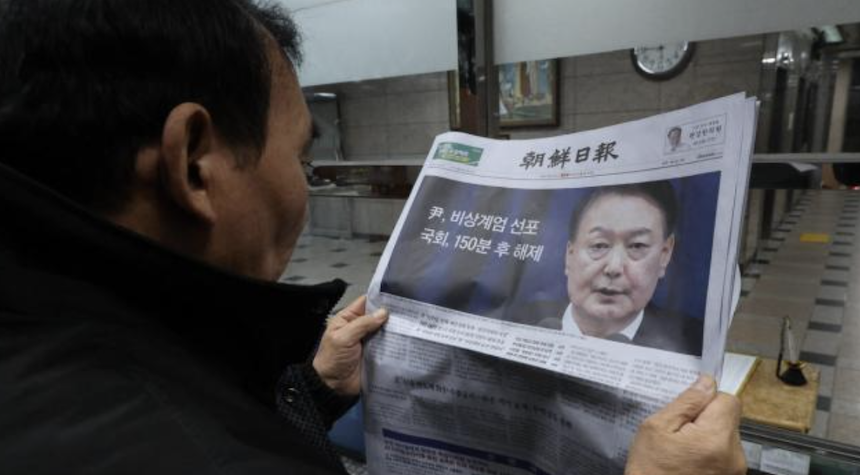
Liberal opposition Democratic Party which was behind the legislative campaign that led to Yoon being impeached on December 14 issued a press release calling on the presidential security services to cooperate in Yoon’s detention. Yoon’s People Power Party lawmakers held a rally outside the presidential residence to denounce the illegality of the detention efforts.
In recent days, the National Police Agency convened several meetings with field commanders to plan detention efforts. The size of these forces led to speculation that over a thousand officers might be deployed for a multiday operation. The National Police Agency and the police have warned openly that any presidential bodyguards who obstruct the execution of a warrant could be arrested.
Yoon’s attorneys have claimed that the Seoul Western District Court detention warrant was invalid. The lawyers cited a rule that prohibits searches of locations with a potential link to military secrets without consent from the person in control, which would be Yoon. The court warrants that Yoon is being held in custody until January 21.
Yoon’s critics and supporters have both held protests near his residence. One side has called for his arrest, while the other wants to protect him. Thousands of police in yellow jackets are closely monitoring the situation.
Yoon declared martial order and deployed troops to the National Assembly on Dec. 3. The blockade lasted just a few hours before the lawmakers were able to break through and vote to lift martial law.
Yoon’s powers as president were suspended after the assembly, which was dominated by the opposition, voted on Dec. 14 to impeach Yoon for rebellion. The Constitutional Court will decide his fate. It has already begun to deliberate on whether or not it should remove Yoon formally from office, or dismiss the charges against him and reinstate him.
The Constitutional Court conducted its first formal hearing on the case Tuesday. However, the session was only five minutes long because Yoon did not attend. The next hearing will be held on Thursday. The court will proceed with the case regardless of whether Yoon attends.