
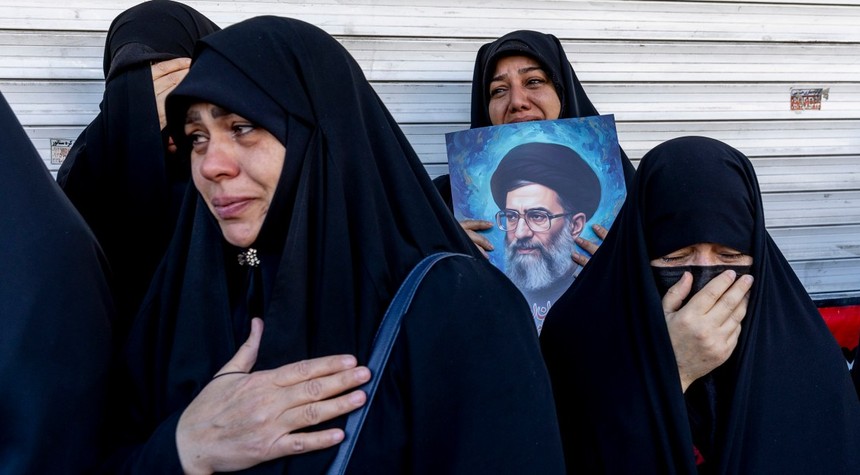
For the first time in thirty-seven years, Iran awakened without Ayatollah Ali Khamenei. The Supreme Leader, who ruled the Islamic Republic for nearly four decades, was killed in coordinated American and Israeli airstrikes, leaving Tehran suspended between mourning and anticipation of what comes next.
The streets of the Iranian capital presented a portrait of a nation divided. Black-clad mourners gathered by the thousands in Enghelab Square on Sunday morning, beating their chests and clutching photographs of the fallen leader. Men embraced and wept openly, some leaning against shuttered storefronts, overcome with grief. Their chants of “God is great” echoed through neighborhoods otherwise eerily silent as businesses, schools, and universities closed their doors.
A semiofficial Iranian news agency announced the death with characteristic rhetoric, stating that Khamenei had been “martyred in a joint attack by the criminal United States and the Zionist regime.” Iranian President Masoud Pezeshkian declared his predecessor a martyr and vowed revenge, initiating the traditional forty days of mourning that Islamic custom prescribes.
Yet beyond the grief displayed in Tehran’s public squares, a different reaction emerged across Iran. In the southern provinces, eyewitness video captured crowds toppling a monument to Ayatollah Ruhollah Khomeini, the Islamic Republic’s founder and Khamenei’s predecessor. In Shahsavar, a coastal city in northern Iran, verified footage showed residents cheering and honking car horns in celebration. Even in Tehran itself, voices could be heard from rooftops shouting “Long live the shah,” a reference to the monarchy overthrown in 1979.
These celebrations remained largely scattered and cautious. The regime’s opponents, who turned out by the thousands for protests in January only to face brutal suppression, appeared to heed calls for restraint. President Donald Trump, announcing the strikes, advised Iranians directly: “Don’t leave your home. It’s very dangerous outside. When we are finished, take over your government.”
Former Crown Prince Reza Pahlavi, who serves as a symbolic figure for some opposition groups, similarly urged patience. “Stay alert and ready to return to the streets for the final action at the appropriate time,” he said Saturday.
The question now confronting Iran and the wider Middle East is one of succession. Khamenei held power longer than any other head of state in the region, and his death creates a vacuum at the pinnacle of Iranian governance. The Supreme Leader wielded authority over all branches of government, the military, and the judiciary. His replacement will determine whether Iran continues on its current path or charts a new course.
That uncertainty comes at a particularly volatile moment. Iran has been battered by war abroad, supporting proxy forces across the Middle East while facing international isolation and economic pressure. At home, dissent has grown increasingly bold despite violent crackdowns, with protesters challenging the very foundations of the Islamic Republic.
The streets of Tehran on Sunday morning captured this moment of suspension. The warm glow of sunrise illuminated a capital city holding its breath, waiting to see whether the death of its longest-serving leader marks merely a change in personnel or the beginning of something far more profound. What happens next will shape not only Iran’s future but the balance of power across the entire Middle East.
Related: Iranians Celebrate in Streets Following Death of Supreme Leader Khamenei