
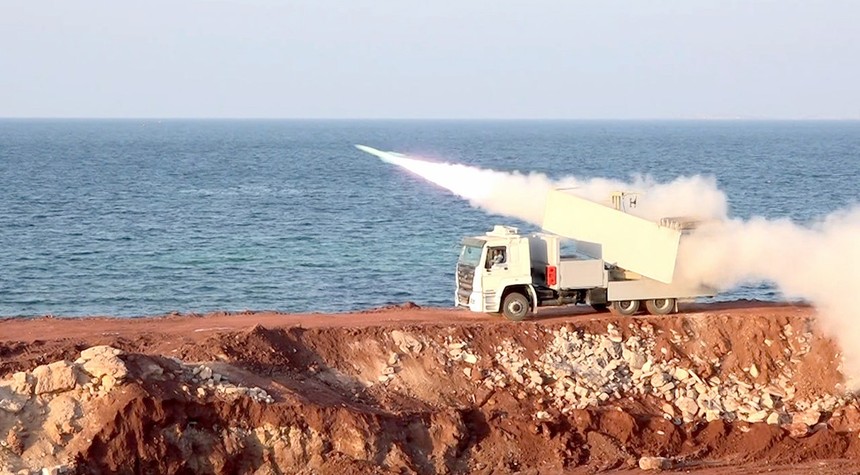
Iran conducted live-fire missile exercises in the Strait of Hormuz on Tuesday, temporarily suspending commercial traffic through one of the world’s most vital oil transit routes while American envoys pursued diplomatic negotiations in Geneva.
The military drills, which Iranian state-affiliated media characterized as the “Smart Control of the Strait of Hormuz” exercise, included missile launches from naval vessels, coastal batteries, and inland positions. Drone operations were conducted under signal-jamming conditions, demonstrating what Tehran clearly intended as a show of military capability during a sensitive diplomatic moment.
Rear Admiral Alireza Tangsiri, commander of the Islamic Revolutionary Guard Corps Navy, stated that Iran maintains the readiness to close the strait entirely if directed by senior leadership. This declaration carries significant weight, as approximately one-fifth of the world’s petroleum passes through this narrow waterway between Iran and Oman.
The timing of these exercises cannot be dismissed as coincidental. As Iranian forces fired missiles into these strategic waters, President Donald Trump’s envoys, Steve Witkoff and Jared Kushner, were meeting with senior Iranian officials in Geneva for a second round of nuclear negotiations. This simultaneous display of military force and diplomatic engagement reflects a calculated approach by Tehran to negotiate from a position of demonstrated strength.
The strait itself represents a geographic chokepoint of immense strategic importance. At its narrowest, the waterway spans merely 21 miles, making it vulnerable to interdiction. Any sustained closure would send shockwaves through global energy markets and potentially draw international military response.
Iranian state media reported that maritime traffic through the shipping corridor was suspended for several hours during the exercises. While such suspensions during military drills are not unprecedented, the explicit messaging about Iran’s capability and willingness to close the strait entirely marks a more aggressive posture.
The Revolutionary Guard Corps, which conducted these exercises, operates as a distinct military force separate from Iran’s regular armed forces. The IRGC answers directly to Iran’s Supreme Leader and has historically taken a harder line on relations with the West than other elements of the Iranian government.
For the Trump administration, these developments present both challenge and opportunity. The willingness of Iranian officials to engage in direct talks represents a potential diplomatic opening that has eluded previous administrations. However, Tehran’s simultaneous demonstration of military capability and explicit threats to close a critical international waterway underscore the complexity of reaching any sustainable agreement.
The international community watches these developments with considerable concern. Any disruption to oil flows through the Strait of Hormuz would affect not only American interests but those of allies and adversaries alike. The global economy remains dependent on the free flow of energy resources through this narrow passage.
As negotiations continue in Geneva, the world faces a familiar question about Iran: whether Tehran’s leadership genuinely seeks diplomatic resolution or merely uses negotiations as cover while advancing military capabilities and regional influence. The answer to that question may well determine whether the current talks produce meaningful results or simply delay an inevitable confrontation.
Related: Australian Terror Suspect Makes First Court Appearance After Hanukkah Attack