
Iranian President Masoud Pezeshkian has submitted his resignation to the Office of the Supreme Leader following weekend military strikes conducted by United States forces against Iranian military installations.
The resignation comes in the aftermath of what U.S. Central Command has characterized as defensive operations against Iranian radar installations and drone command facilities. The strikes, executed on Saturday and Sunday, targeted sites in Goruk, Iran, and Qeshm Island.
According to official statements from Central Command, the American military action was precipitated by Iran’s downing of a U.S. MQ-1 drone that was conducting operations over international waters. The incident represents a significant escalation in tensions between the two nations, tensions that have simmered for decades but have intensified in recent months.
The American response was swift and calculated. U.S. fighter aircraft eliminated Iranian air defense systems, destroyed a ground control station, and neutralized two one-way attack drones that Central Command identified as immediate threats to maritime vessels navigating regional waters. The precision of these strikes underscores the measured approach taken by American military planners, who sought to respond decisively while limiting the scope of engagement.
The resignation of President Pezeshkian introduces a new element of uncertainty into an already volatile situation. While Iran’s governmental structure places ultimate authority with the Supreme Leader rather than the elected president, Pezeshkian’s departure signals internal pressures within the Iranian regime. Whether this resignation stems from disagreement over the military actions that provoked the American response, or from the perceived failure to adequately defend Iranian assets, remains unclear.
The strategic importance of the targeted locations cannot be understated. Qeshm Island sits at a critical juncture near the Strait of Hormuz, through which nearly one-third of the world’s seaborne oil passes. Any military activity in this region carries implications far beyond the immediate parties involved, affecting global energy markets and international commerce.
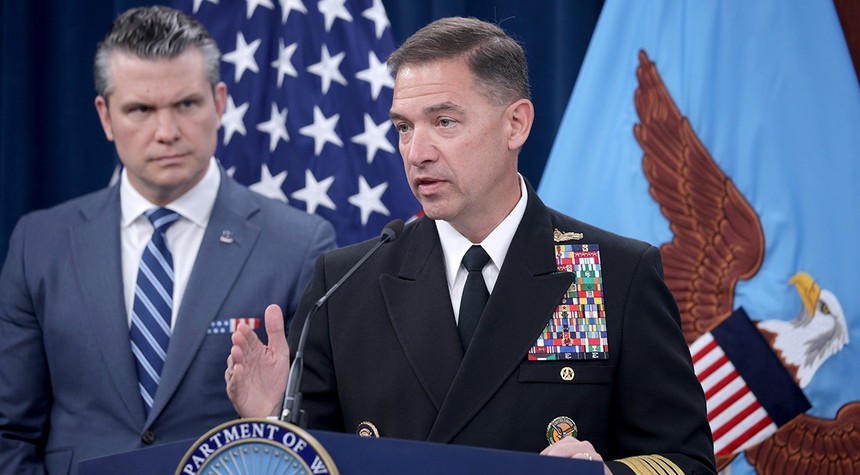
Admiral Brad Cooper, Commander of U.S. Central Command, briefed Pentagon officials on the operations. Secretary of Defense Pete Hegseth has maintained that American forces acted within established rules of engagement and international law, emphasizing that the drone was operating in international airspace when Iranian forces brought it down.
The international community now watches carefully to see how Iran’s Supreme Leader will respond both to the American strikes and to the resignation of the nation’s president. The coming days will likely prove critical in determining whether this incident marks a contained exchange or the beginning of a broader confrontation.
For now, American forces in the region remain at heightened readiness, prepared to defend national interests and protect the freedom of navigation in international waters that has long been a cornerstone of American foreign policy.
Related: Mexico Grants Government Power to Overturn Election Results as Midterms Approach