
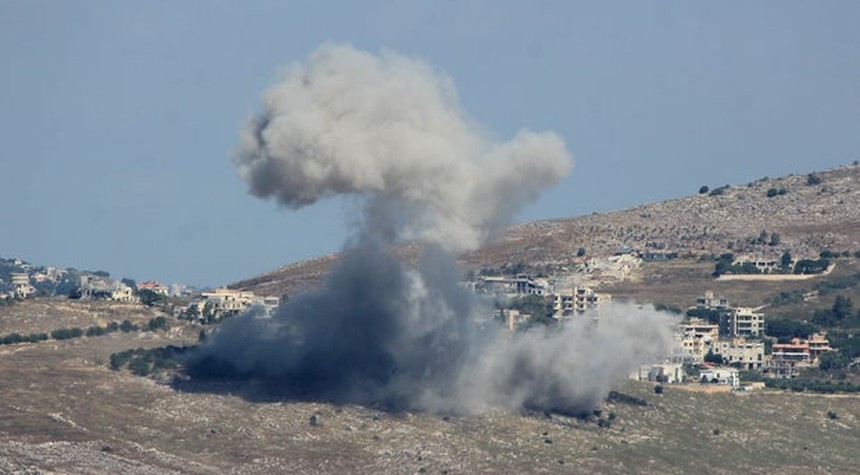
Israeli forces conducted a precision strike on Hezbollah positions in Beirut’s Dahieh district Sunday, a development that may complicate the delicate diplomatic efforts currently underway between Washington and Tehran.
Prime Minister Benjamin Netanyahu and Defense Minister Israel Katz announced the operation in a joint statement, with the Israel Defense Forces characterizing the target as a command center utilized by Hezbollah operatives to coordinate attacks against Israeli citizens and military personnel stationed in southern Lebanon. The IDF emphasized its use of precision munitions and aerial surveillance to minimize civilian casualties.
The timing of this strike warrants careful consideration. It comes as Qatari negotiators, working in coordination with the United States, arrived in Tehran Sunday morning to advance what both President Trump and Pakistani mediators have described as an imminent ceasefire agreement. The framework under discussion reportedly includes provisions for lifting the naval blockade of the Strait of Hormuz and establishing a sixty-day negotiating period to address Iran’s nuclear program.
Tehran has made clear that any comprehensive agreement must include provisions halting Israeli military operations in Lebanon. This position reflects Iran’s long-standing support for Hezbollah, the Shiite militant organization it has backed for decades as part of its regional strategy. When Israeli forces last struck Beirut’s suburbs one week ago, Iran responded with direct strikes on Israeli territory, demonstrating the interconnected nature of these conflicts.
The proposed memorandum of understanding represents a significant diplomatic undertaking. According to previous reports, the agreement would extend the current ceasefire, reopen the Strait of Hormuz to international shipping, and create a structured timeline for addressing Iran’s nuclear enrichment activities. President Trump acknowledged Saturday that no specific timeline exists for resolving what he termed the “nuclear dust” issue, indicating these highly technical discussions would occur during a subsequent period of stability.
The diplomatic process faces substantial opposition within Iran itself. Protests erupted Saturday outside a foreign ministry office in Mashhad, where demonstrators in traditional black chadors denounced Foreign Minister Abbas Araghchi as an infiltrator and traitor. The demonstration, documented by Iranian media, reflected hardline concerns that negotiators have surrendered too much leverage, particularly regarding control of the Strait of Hormuz.
In a state television interview Friday, Araghchi defended the emerging framework, noting it would end the American naval blockade imposed in response to Iran’s own closure of the strategic waterway. He acknowledged, however, that Iran’s administration of the strait would change, describing it as one of Tehran’s primary deterrence mechanisms.
The convergence of these events presents a critical test for regional stability. Israeli security imperatives, Iranian domestic politics, and American diplomatic objectives must somehow align if this framework is to succeed. The strike in Beirut demonstrates that military realities on the ground continue even as diplomats work to establish new parameters for engagement.
What remains clear is that any lasting agreement will require addressing not merely the immediate ceasefire terms, but the underlying strategic competitions that have defined Middle Eastern politics for generations. The coming days will reveal whether the diplomatic momentum can withstand the pressures of ongoing military operations and domestic opposition in key capitals.
Related: Kansas City Authorities Recover Stolen Gear from England’s World Cup Team