
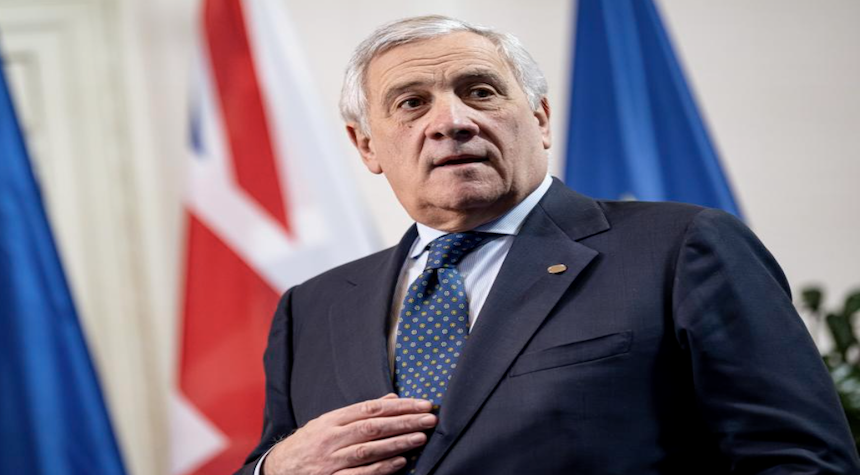
Italian Foreign Minister Antonio Tajani will travel to Syria this Friday to encourage the transition of the country following the ouster by Islamist insurgents of President Bashar al-Assad. Tajani said that Europe should now review its sanctions against Damascus as the political situation has changed.
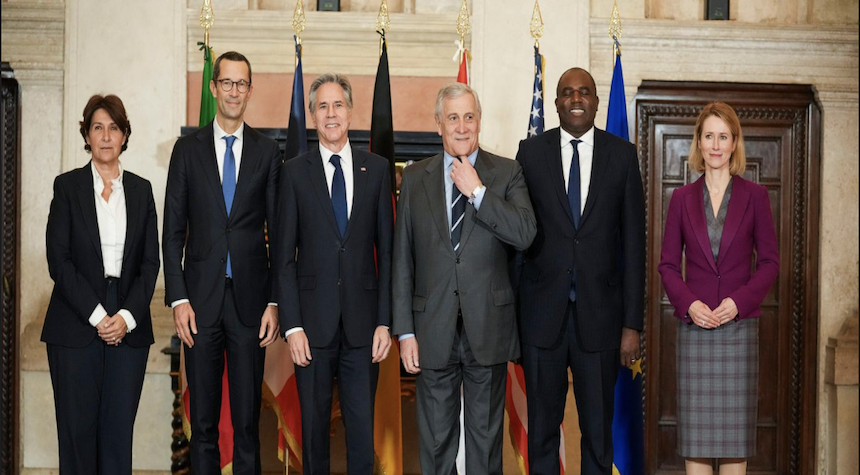
Tajani presided over a meeting of officials from the foreign ministries of five countries — Britain France Germany Italy and the United States — on Thursday in Rome. He had earlier spoken by phone with his counterparts in Turkey and Saudi Arabia. He said the goal was to coordinate various initiatives after Assad, and that Italy is prepared to make private investment proposals in health care for Syrians.
Going into the meeting with U.S. Secretary of State Antony Blinken and their European counterparts, Tajani said all Syrians needed to be recognized with equal rights. It was a reference to concerns about the rights of Christians and other minorities under Syria’s new de facto authorities of Hayat Tahrir al-Sham, or HTS, an Islamic militant group that the U.S. and U.N. have long designated as a terrorist organization.
“The first messages coming from Damascus are positive.” Tajani said, “That’s why I will be going to Damascus tomorrow. To encourage this new phase which will help stabilize international relations.”
He told reporters that the European Union needs to discuss any possible changes in the sanctions regime against Syria. He said that it was important to discuss the issue because Assad no longer exists. It’s a different situation. I believe that encouraging signals are coming in, which should be encouraged.
Syria has been subject to severe sanctions from the United States, European Union, and others as a result of Assad’s brutal reaction to peaceful anti-government demonstrations that began in 2011 but spiraled into civil conflict.
HTS led a lightning-fast insurgency that ousted Assad and his family on Dec. 8, ending decades of rule by the family. Syria’s civil war and uprising killed around 500,000 people between 2011 and Assad’s fall.
Since Assad left Syria to seek protection in Russia, the U.S. gradually reduced some sanctions. In December, the Biden administration decided to withdraw a $10m bounty they had offered in exchange for the capture of a Syrian leader whose forces were responsible for ousting Assad last month.
Syria’s new leadership has also been asked to respect minorities and the rights of women. Many Syrian Christians who constituted 10% of the country’s population before the civil war fled or supported Assad because they were afraid of Islamist insurgents.