
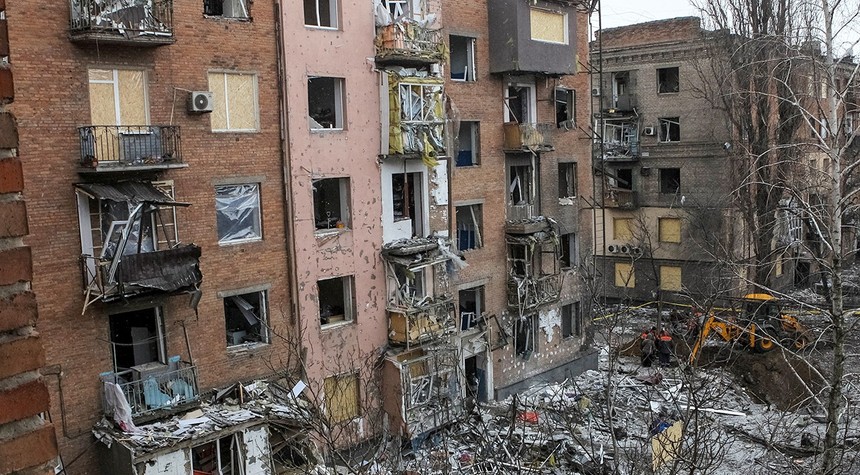
Russia announced Friday that it had deployed its advanced Oreshnik hypersonic missile system in a strike against Ukrainian territory, marking the second known use of the intermediate-range weapon since its introduction to the conflict.
The Kremlin justified the attack as retaliation for what it characterized as an attempted Ukrainian drone strike on a residence belonging to Russian President Vladimir Putin on December 29. Ukrainian officials have categorically rejected this claim, with Kyiv dismissing the allegation as fabricated.
The Russian assertion has encountered considerable skepticism from both Ukrainian authorities and American leadership. Ukraine has termed the Russian claim “an absurd lie,” while President Donald Trump expressed doubt about the veracity of Moscow’s account. The President suggested that while “something” may have occurred in the vicinity, he did not believe an actual strike on Putin’s residence took place.
This incident represents the second deployment of the Oreshnik missile system, which President Putin has characterized as effectively unstoppable due to its extraordinary velocity. The weapon system carries nuclear capability, though Russia has not indicated whether conventional or nuclear warheads were employed in this instance.
The timing of this escalation carries particular significance, as it occurs against the backdrop of potential diplomatic discussions. The conflicting narratives between Moscow and Kyiv regarding the alleged December 29 incident have added another layer of complexity to an already intricate geopolitical situation.
Russia released drone footage purportedly documenting the aftermath of the alleged attack on Putin’s residence, though international observers have questioned the authenticity and context of the imagery. The release of such footage appears designed to bolster Moscow’s justification for the subsequent missile deployment, yet it has done little to persuade skeptics of the Kremlin’s account.
The Oreshnik missile system represents a significant component of Russia’s advanced weapons arsenal. Its hypersonic capabilities, which Putin claims render it immune to existing missile defense systems, mark a concerning development in modern warfare technology. The weapon’s intermediate-range classification places it in a category that had been previously regulated under now-defunct arms control agreements between Moscow and Washington.
The international community continues to monitor the situation with grave concern. The deployment of such advanced weaponry, regardless of the circumstances that precipitated it, signals a continued escalation in the conflict that shows no signs of abating. The disputed nature of the triggering incident only compounds the difficulty of establishing a clear factual record upon which diplomatic solutions might be constructed.
As this situation develops, the divergent accounts from Moscow, Kyiv, and Washington underscore the challenge of ascertaining truth in modern conflict zones where information itself has become weaponized. What remains clear is that the use of hypersonic missile technology represents a troubling escalation, and the path toward de-escalation appears increasingly uncertain.
Related: Thousands March in Colombia Against American Military Intervention