
A troubling development in the ongoing struggle against narcotics trafficking has emerged from Mexico, where the federal government is now pursuing criminal charges against a border state governor whose offense appears to be cooperation with American law enforcement agencies.
Maria Eugenia Campos, known as “Maru,” the governor of Chihuahua, appeared this week before Mexico’s Attorney General’s Office for questioning. While officially summoned as a witness, legal observers in Mexico recognize this tactic as a preliminary step before formal charges are filed. The case has generated considerable controversy throughout the country.
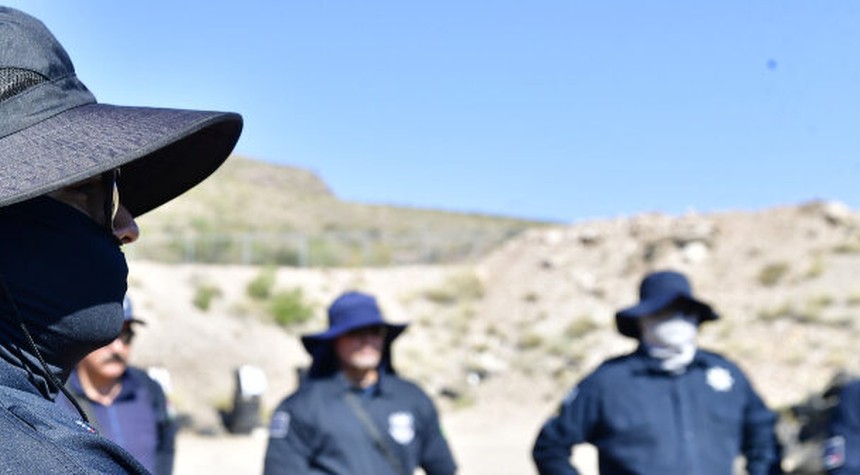
The roots of this prosecution trace back to April, when two American agents perished in a highway accident while returning from a remarkably successful raid on what authorities described as one of the largest drug laboratories ever discovered in Mexico. State police forces under Governor Campos’s jurisdiction participated in the operation, which targeted a Sinaloa Cartel installation.
Rather than celebrating this significant blow against one of the world’s most dangerous criminal organizations, Mexico’s federal government raised immediate objections. Officials claimed that CIA agents had operated within Mexican territory without proper authorization, characterizing the raid as a violation of national sovereignty.
The timing of this controversy proved particularly significant. The incident occurred nearly simultaneously with the United States government’s public announcement of indictments against high-ranking members of Mexico’s ruling MORENA party for alleged collaboration with the Sinaloa Cartel. Among those indicted is Ruben Rocha Moya, the current governor of Sinaloa state.
President Claudia Sheinbaum has mounted a vigorous defense of Rocha Moya, opposing any potential extradition to the United States and insisting that no evidence of wrongdoing exists. This position has created substantial friction with American authorities, who have intensified their focus not merely on dismantling cartel operations but on holding accountable the politicians who provide them protection.
President Sheinbaum herself called for the investigation into Governor Campos, declaring that a state governor’s direct cooperation with foreign agencies constituted treason. The severity of this charge against an official whose crime was assisting in the fight against narcotics trafficking cannot be overstated.
The situation has grown more complex. Shortly after her initial appearance this week, Governor Campos received a second summons, this time concerning an alleged kidnapping conspiracy. Federal prosecutors claim she conspired to kidnap her predecessor, Javier Corral, a politician with documented cartel connections. These allegations stem from Campos’s attempt to arrest Corral on corruption charges related to financial crimes committed during his gubernatorial term.
Corral has recently aligned himself with the MORENA party and has met with associates of Governor Rocha Moya, some of whom also face prosecution in the United States on drug-related charges. Since establishing this political alliance, Corral has effectively shielded himself from accountability for his alleged crimes.
The implications of this case extend far beyond one governor’s legal troubles. At stake is the fundamental question of whether Mexican officials who cooperate with American law enforcement in the fight against drug cartels will face persecution from their own federal government. The United States has made clear its determination to pursue not only cartel operatives but also the government officials who enable their operations. Mexico’s response, as evidenced by the prosecution of Governor Campos and the protection of Governor Rocha Moya, suggests a troubling divergence in priorities between the two nations.
This is the sort of moment that tests the strength of international cooperation in confronting organized crime. And that is the way it is.
Related: United States Moves Against Iranian Control of Strategic Waterway