
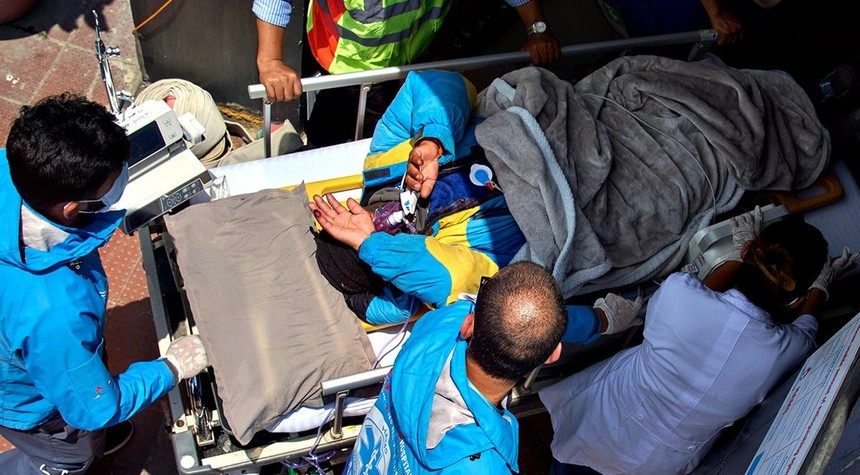
In what rescue officials are calling an extraordinary testament to human endurance, a Sherpa guide has survived nearly a week alone on Mount Everest without food, water, or supplemental oxygen after vanishing during a descent from the world’s highest peak.
Dawa Sherpa, 52, disappeared on May 29 while descending Everest after turning back from a summit attempt with a Polish climber under his guidance. While his client reached base camp safely, Dawa failed to arrive, leading his family to fear the worst and begin traditional funeral rituals.
On Thursday morning, a cleanup crew from the Sagarmatha Pollution Control Committee discovered the missing guide crawling through the Khumbu Icefall, one of Everest’s most treacherous sections, located just above base camp. Pemba Sherpa of 8K Expeditions confirmed the rescue, describing the survival as nothing short of miraculous.
The discovery ended six days of uncertainty during which Dawa had somehow managed to survive in conditions that would prove fatal to most climbers within hours. The Khumbu Icefall, where he was found, presents a constantly shifting maze of ice blocks and deep crevasses that has claimed numerous lives over the decades of Everest expeditions.
Rescue teams immediately carried Dawa to safety, providing him with food and water before evacuating him by helicopter to a hospital in Kathmandu. His wife and daughter, who had been preparing for the worst possible outcome, were waiting at the medical facility when he arrived.
The circumstances of Dawa’s survival raise questions that may never be fully answered. How he managed to endure the extreme cold, thin air, and complete absence of sustenance for nearly a week defies conventional understanding of human limitations at altitude. Most climbers require supplemental oxygen above 26,000 feet, and survival without food and water in such conditions typically measures in hours, not days.
The Sherpa community, which forms the backbone of the Everest climbing industry, has long demonstrated remarkable resilience and adaptation to high-altitude conditions. However, even by those standards, Dawa’s survival stands as an exceptional case.
This incident serves as a sobering reminder of the inherent dangers that persist on Everest despite decades of commercial expeditions and improved safety measures. Each climbing season brings new challenges, and the mountain continues to demand respect from even the most experienced guides and climbers.
As Dawa recovers in Kathmandu, his story adds another chapter to the extraordinary history of survival against impossible odds on the world’s highest peak. Medical professionals will likely study his case to better understand the limits of human endurance in extreme conditions.
The rescue also highlights the ongoing efforts to maintain safety protocols and search capabilities on Everest, where the cleanup crews that found Dawa serve the dual purpose of environmental stewardship and emergency response. Their presence at the right moment transformed what appeared to be a certain tragedy into a remarkable story of survival.
Related: Iranian Missile Strike Damages Kuwait International Airport, Kills One