
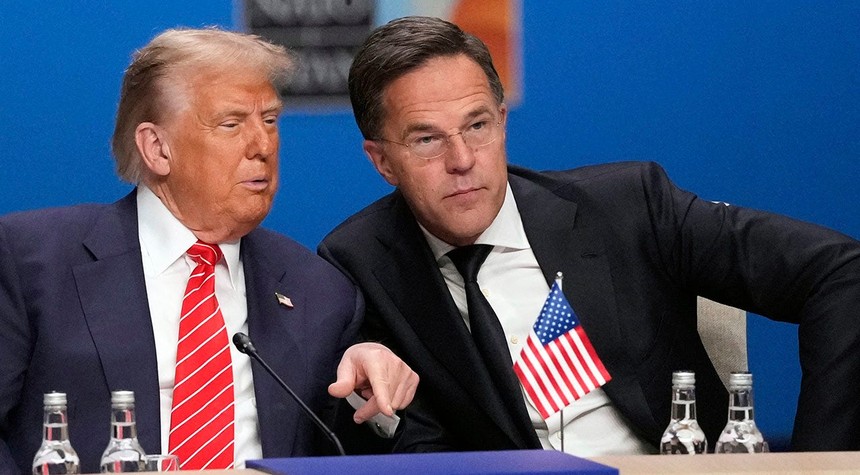
NATO Secretary-General Mark Rutte offered a vote of confidence Monday in President Trump’s efforts to broker peace between Ukraine and Russia, citing the administration’s recent diplomatic successes as evidence that a resolution to the conflict may be within reach.
Speaking to American television audiences, Rutte acknowledged the complexity of the Ukraine situation while expressing optimism that the Trump administration’s approach could ultimately succeed in ending the war that has consumed Eastern Europe for more than three years.
“It always takes two to tango, but it starts with a plan, and it starts with a president, President Trump, who wants to end this,” Rutte said, drawing parallels to recent diplomatic achievements involving Pakistan and India, the Gaza ceasefire, the degradation of Iran’s nuclear capabilities, and the Armenia-Azerbaijan peace process.
The NATO chief’s remarks represent a significant endorsement of American leadership at a critical juncture in the conflict. His comments come as United States and Ukrainian officials report progress on negotiations aimed at ending hostilities with Russia, though specific details of the peace framework remain closely guarded.
Rutte was candid in acknowledging that the Ukraine situation presents unique challenges. He noted that President Trump had initially suggested this would be among the easier conflicts to resolve, but reality has proven otherwise.
“This is a difficult one. He said that this would be one of the easier ones. No, it was not true. It is one of the more difficult ones, but I’m sure that we will get this done,” Rutte stated.
The NATO secretary-general’s assessment reflects the intricate nature of the Ukraine conflict, which involves not only territorial disputes and security guarantees but also broader questions about European security architecture and the balance of power between NATO and Russia. The war has tested the Atlantic alliance in ways not seen since the Cold War, forcing member nations to reconsider defense spending, energy independence, and collective security commitments.
President Trump’s diplomatic approach has emphasized direct engagement with world leaders and a willingness to challenge conventional diplomatic wisdom. His administration has pursued peace agreements in multiple theaters simultaneously, arguing that American strength and presidential involvement can break through diplomatic logjams that have stymied previous administrations.
The progress reported by American and Ukrainian officials, while still preliminary, suggests that months of behind-the-scenes negotiations may be bearing fruit. The path forward likely involves difficult compromises on all sides, including questions of territorial integrity, security guarantees for Ukraine, and Russia’s relationship with the broader European security order.
For NATO, a peaceful resolution to the Ukraine conflict would represent both a diplomatic achievement and a test of the alliance’s ability to adapt to changing geopolitical realities. The organization has provided substantial support to Ukraine throughout the conflict while carefully managing the risk of direct confrontation with Russia.
As negotiations continue, the international community watches closely to see whether American diplomacy can indeed bring an end to Europe’s deadliest conflict in decades.
Related: Virginia Congressman Demands Release of Trump Call with Saudi Crown Prince