
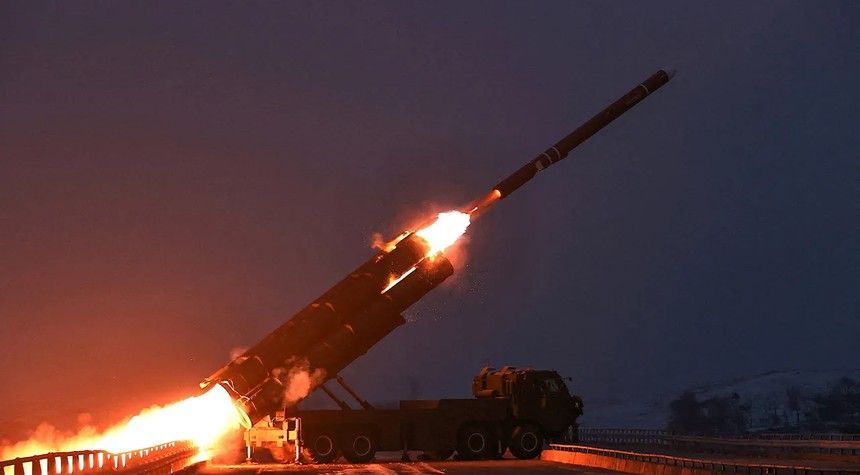
North Korea conducted a test launch of two strategic cruise missiles over the weekend as the regime’s leader, Kim Jong Un, renewed his commitment to what he termed the “unlimited and sustained development” of the nation’s nuclear arsenal.
The missiles, designed to carry nuclear warheads according to North Korea’s state-run Korean Central News Agency, flew over the country’s western coastline for nearly three hours. The agency did not disclose the distance traveled by the weapons, though the extended flight time suggests significant range capabilities.
Kim personally oversaw the exercises and directed his military forces to dedicate all efforts toward expanding the state’s nuclear combat capabilities. The launch represents the latest demonstration of Pyongyang’s determination to advance its strategic weapons program despite international pressure and sanctions.
South Korean military officials confirmed detecting the launches, which occurred around eight o’clock Sunday morning from the Sunan area near the North Korean capital of Pyongyang. The South Korean Joint Chiefs of Staff tracked multiple cruise missiles during the exercise.
According to the North Korean state media, the drills served multiple strategic purposes. Officials in Pyongyang characterized the tests as a demonstration of the “combat readiness of the nuclear deterrence force” and an affirmation of the regime’s capacity to execute what it described as a “swift and overwhelming retaliatory strike” should conflict arise.
The state news agency framed the launches as a direct warning to what it termed “enemies who are seriously threatening the security environment” of North Korea, using the nation’s formal designation, the Democratic People’s Republic of Korea.
A spokesperson for South Korea’s Defense Ministry responded to the tests by noting that such military activities “undermine peace and stability on the Korean Peninsula.” The statement reflects ongoing concerns in Seoul about the North’s weapons development and testing program.
These latest launches come amid heightened attention to North Korea’s expanding military capabilities. The regime recently released images purporting to show progress on a nuclear-powered submarine program, with photographs depicting Kim inspecting construction at a shipyard. The North Korean leader was accompanied by his daughter during the visit, continuing the pattern of her public appearances alongside her father at military facilities.
The timing of these tests coincides with diplomatic activity in the region, as President Donald Trump recently indicated openness to potential dialogue with the North Korean leader during his current trip to Asia. The President met with Japanese Prime Minister Sanae Takaichi to discuss regional security matters, with the North Korean nuclear program undoubtedly among the topics of conversation.
The cruise missile tests underscore the persistent challenge North Korea poses to regional stability and international non-proliferation efforts. Unlike ballistic missiles, cruise missiles follow a different flight path and present distinct detection and defense challenges for neighboring nations and their allies.
As tensions continue on the Korean Peninsula, the international community faces the ongoing question of how to address a regime determined to expand its nuclear capabilities while simultaneously expressing interest in diplomatic engagement.
Related: Interoceanic Train Carrying 250 Passengers Derails in Southern Mexico