
The United Kingdom finds itself in a precarious position regarding energy security, a situation largely of its own making through deliberate policy choices that have left British consumers vulnerable to international market forces and geopolitical turbulence.
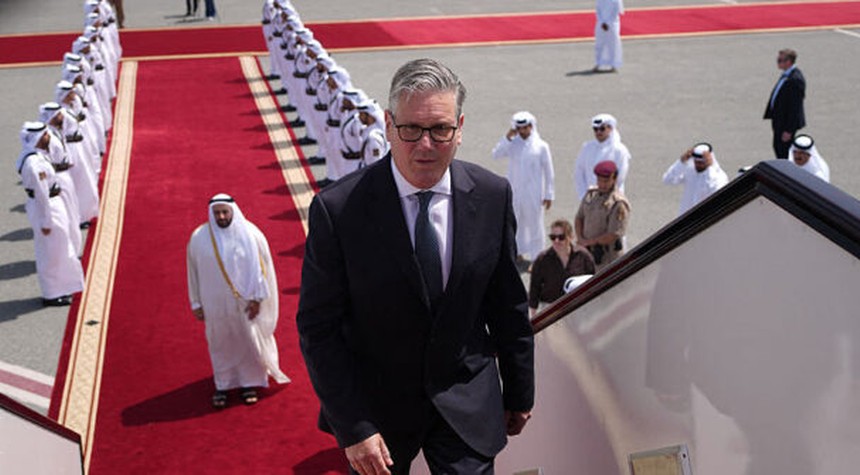
Prime Minister Sir Keir Starmer recently appeared on a political podcast where he expressed frustration with energy price volatility affecting British families and businesses. In his remarks, he placed blame squarely on the shoulders of American President Donald Trump and Russian President Vladimir Putin, treating both leaders as equivalent threats to British energy stability.
“I’m fed up with the fact that families across the country see their bills go up and down on energy, businesses’ bills go up and down on energy because of the actions of Putin or Trump across the world,” Starmer stated during his conversation with journalist Robert Peston.
The Prime Minister’s comments reflect genuine concerns facing the British people. Energy prices in the United Kingdom rank among the highest globally, a burden that has accelerated the deindustrialization of what was, within living memory, one of the world’s premier manufacturing and engineering economies. The war in Ukraine, which began over a decade ago and escalated to full-scale invasion more than four years past, has contributed significantly to price instability. Current tensions involving Iran have compounded these challenges.
What remains conspicuously absent from the government’s response is any meaningful effort to address the fundamental vulnerability at the heart of Britain’s energy predicament. The United Kingdom possesses substantial domestic energy resources that remain deliberately untapped. Coal production ceased before known reserves were exhausted. Considerable oil and gas deposits lie beneath the North Sea. The nation’s shale gas potential has never been explored.
Despite these natural advantages, successive British governments have maintained that domestic energy production represents a moral failing, preferring instead to source oil and gas from foreign suppliers. While hydraulic fracturing technology has enabled an energy revolution in the United States, dramatically reducing consumer costs, the British government banned fracking and sealed exploratory wells with cement, ensuring these resources would remain inaccessible.
The consequences of these choices extend beyond consumer electricity bills. Britain’s Foreign Secretary recently declared that the Strait of Hormuz “must not” be anything but completely open and free for oil transport. Yet decades of defense budget reductions have left the government unable to enforce such declarations with meaningful action. Britain has attempted to organize an international coalition to police the strait, but weeks of diplomatic effort have produced little beyond conversation at a time when President Trump has called upon allies to fulfill their commitments within days rather than months.
The contrast between rhetoric and capability reveals the depth of Britain’s strategic weakness. A nation that once projected power globally now finds itself reduced to making demands it cannot enforce and expressing frustration over circumstances it has chosen not to address through available means.
The British government’s resistance to improving energy independence persists even as evidence mounts of the policy’s failure. Industrial buyers and residential consumers alike bear the cost of this ideological commitment to foreign energy dependence. What remains of British manufacturing struggles under some of the developed world’s highest energy costs, further eroding an industrial base that once defined the nation’s economic strength.
Prime Minister Starmer’s public displays of concern ring hollow against this backdrop of deliberate policy choices that prioritize abstract principles over practical security and economic competitiveness. The United Kingdom possesses the natural resources and technical capability to substantially improve its energy independence. What it apparently lacks is the political will to pursue such a course.
Related: Defense Chief Confirms Australian Crews Withhold Offensive Intelligence from US Operations