
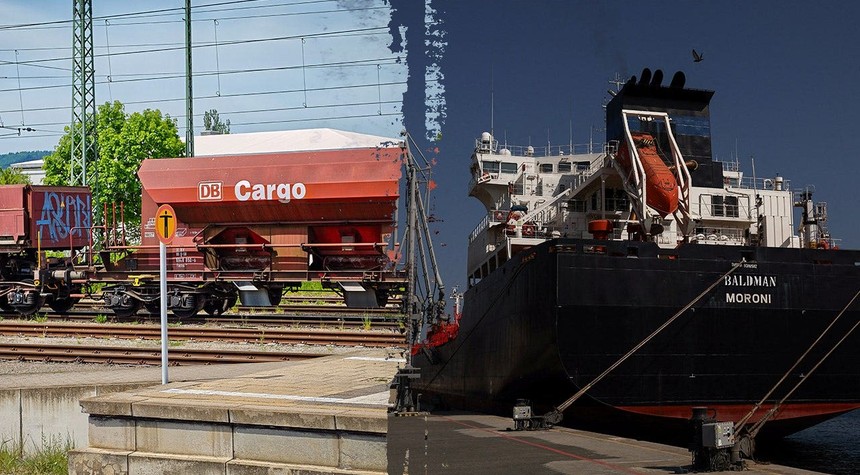
The United States faces a strategic dilemma in its effort to economically isolate Iran. While American naval forces maintain formidable control over maritime chokepoints, an expanding rail corridor linking China to Iran is providing Tehran with an alternative trade route that Washington cannot easily disrupt without risking broader conflict.
Freight traffic along this overland route has increased substantially in recent months. Cargo trains running from central China to Iran have jumped from approximately one per week to one every three or four days, according to recent data. This surge comes as the United States intensifies its maritime interdiction efforts against Iranian shipping.
The rail corridor traverses multiple sovereign nations, including Kazakhstan and Turkmenistan, creating diplomatic and practical obstacles far more complex than those involved in monitoring Persian Gulf shipping lanes. Any American attempt to disrupt this overland network would necessarily involve actions on the territory of nations not directly party to the Iran dispute, risking an expansion of tensions that could draw in additional powers.
Dennis Citrinowicz, an analyst at the Institute for National Security Studies, offers insight into Beijing’s calculated position in this developing situation. China does not desire an Iranian nuclear weapon, yet it derives strategic advantage from America’s sustained focus on Tehran. Every munition, every dollar, and every hour of strategic attention devoted to containing Iran represents resources unavailable for addressing what many analysts consider the more significant long-term challenge: Chinese ambitions regarding Taiwan.
This represents precisely the kind of strategic diversion Beijing has long sought. China has invested heavily in developing trade routes designed to circumvent maritime chokepoints where American naval power remains supreme. The rail corridor to Iran serves as a demonstration project for this broader vision of Eurasian connectivity beyond the reach of American warships.
However, experts caution against overestimating the corridor’s immediate economic impact. Isaac Kardon, a senior fellow focused on Chinese strategy and maritime security, noted that perhaps only one percent of Iran’s typical exports through the Strait of Hormuz could feasibly travel overland. There exists no substitute for very large crude carriers when moving the volumes of oil that constitute Iran’s primary export commodity.
Max Meizlish, a former Treasury official specializing in sanctions policy, characterized the rail corridor as a drop in the bucket compared to Iran’s traditional oil exports over maritime transit routes.
Nevertheless, the strategic implications extend beyond immediate tonnage figures. The corridor provides Iran with economic breathing room and demonstrates the limitations of strategies that rely exclusively on naval dominance. As global trade patterns evolve and nations invest in alternatives to sea-based commerce, the United States confronts the reality that control of the seas, while still vital, no longer guarantees complete economic leverage.
Citrinowicz expresses pessimism about finding straightforward solutions to the Iran challenge, given the firm positions maintained by all parties involved. The United States seeks to prevent Iranian nuclear development and constrain Tehran’s regional activities. Iran seeks economic relief and regional influence. China seeks to maintain American attention on the Middle East while building infrastructure that reduces global dependence on maritime routes.
This three-way dynamic illustrates the complexity of modern great power competition, where geography, economics, and military capability intersect in ways that defy simple solutions. The rail corridor may carry only a fraction of Iran’s traditional export volume, but it carries significant weight in demonstrating the evolving nature of international leverage in an era of renewed great power rivalry.
Related: Network of 425 Organizations Plans Worldwide Anti-Israel Demonstrations