
The arithmetic of modern warfare has presented American military planners with a troubling equation. As hostilities intensify between the United States and Iran, the Pentagon finds itself expending resources at a rate that may prove unsustainable against an adversary employing one of warfare’s oldest strategies: making the enemy pay more to defend than it costs to attack.
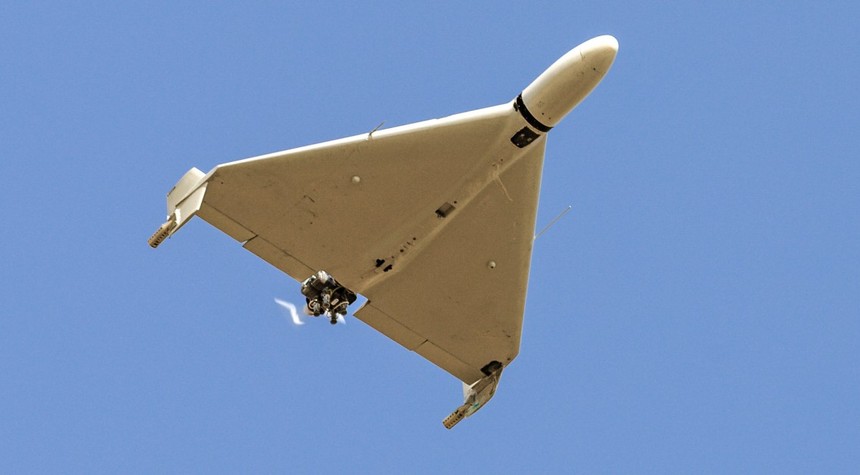
Iran’s Shahed drones, unmanned aerial vehicles costing between thirty and fifty thousand dollars to manufacture, have struck American embassies, radar installations, airports, and civilian infrastructure across the Middle East. The weapons themselves represent nothing revolutionary in design or capability. Their power lies elsewhere, in the economic burden they impose upon those who must stop them.
General Dan Caine, chairman of the Joint Chiefs of Staff, acknowledged the persistent threat during a Monday briefing, noting that American systems have proven effective in engaging these platforms rapidly. Yet effectiveness and sustainability are not synonymous, and it is sustainability that now concerns defense analysts.
Data from the United Arab Emirates Defense Ministry reveals that Iran has launched hundreds of Shahed drones at the Gulf state, with American and allied forces intercepting just over ninety percent. This success rate, impressive by any measure, comes at considerable expense. The United States and its regional partners typically employ aircraft sorties or Patriot missile systems for interception. Each Patriot interceptor costs ten times the price of a Shahed drone or more, while simultaneously depleting stockpiles that cannot be replenished overnight.
Kelly Grieco, a senior fellow at the Stimson Center, calculated that for every dollar Iran invests in manufacturing a Shahed drone, the UAE spends between twenty and twenty-eight dollars to intercept it. Should hostilities continue at this pace, Grieco observed, more sustainable countermeasures will become necessary.
The strategic calculus behind Iran’s drone program reflects decades of military planning by a nation that has never harbored illusions about matching American conventional superiority. Kyle Glen, an investigator with the London-based Center for Information Resilience, noted that Iran has long prepared for precisely this type of conflict. Facing technologically superior adversaries has driven Tehran toward asymmetric warfare, seeking methods to frustrate and exhaust rather than defeat outright.
The Shahed exemplifies this approach. These drones can be assembled using dual-use components available through civilian supply chains and launched from mobile platforms, requiring none of the extensive infrastructure that ballistic missiles demand. This allows for covert production and dispersed deployment, complicating efforts to eliminate the threat at its source.
The current military operation began Friday night, with American and Israeli forces striking Iranian naval installations and ballistic missile storage facilities. Iran responded with hundreds of drones and missiles targeting American bases, airports, and energy infrastructure throughout the region, apparently calculated to impose both political and economic costs upon Washington and its allies.
Russia recognized the utility of this approach early, incorporating Iranian drones into its own military operations. That development suggests the challenge facing American defense planners extends beyond the immediate Middle Eastern theater.
The question now confronting military strategists is not whether American technology can intercept Iranian drones. The question is whether the United States can afford to continue doing so indefinitely, and what alternatives might preserve both security and solvency in an extended conflict.
Related: Iran Faces Uncertain Future After Death of Supreme Leader Khamenei