
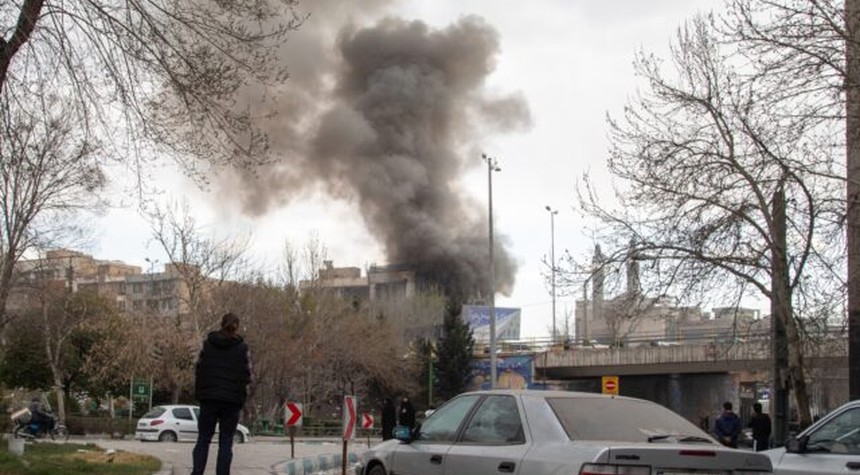
The military operation against Iran reached its sixteenth day on Sunday, with global attention remaining fixed on the strategic Strait of Hormuz and the potential disruption to international energy supplies. President Trump and what remains of the Iranian regime have both dismissed calls for peace negotiations as the crisis continues.
President Trump intensified his demands that America’s allies contribute naval forces to secure the Strait of Hormuz, warning that failure to do so could fundamentally alter the North Atlantic Treaty Organization. In remarks to the Financial Times on Sunday, the President made clear his expectation that nations dependent on Gulf oil should bear responsibility for protecting this critical shipping lane.
“It’s only appropriate that people who are the beneficiaries of the Strait will help to make sure that nothing bad happens there,” Trump stated. He added that a negative or absent response from allies “will be very bad for the future of NATO.”
The President’s position rests on a straightforward economic reality. The United States has achieved substantial energy independence through hydraulic fracturing technology and energy policies implemented during both Trump administrations. European and Asian nations, by contrast, remain heavily dependent on petroleum flowing through the Strait of Hormuz. The President argued these nations should therefore assume a greater share of the security burden.
Trump indicated he may postpone a scheduled summit with Chinese President Xi Jinping if Beijing refuses to contribute to keeping the Strait operational. Several powers, including France, South Korea, and the United Kingdom, have expressed willingness to deploy warships to the region but have not yet made firm commitments.
Inside Iran, the regime has intensified its internal crackdown. Iranian authorities reported the arrest of approximately five hundred individuals accused of providing intelligence to enemy forces. Police chief Ahmadreza Radan claimed that roughly half of those detained had supplied targeting information or documented strike locations for transmission to adversaries.
French President Emmanuel Macron, who has positioned French naval assets in the Mediterranean, urged Iranian President Masoud Pezeshkian to cease indiscriminate attacks throughout the Gulf region, including operations conducted through proxy forces in nations such as Lebanon. Macron characterized any assault on French military assets, which he described as maintaining a defensive posture, as “unacceptable.” He further pressed Tehran to restore freedom of navigation through the Strait of Hormuz without delay.
President Trump also spoke with British Prime Minister Sir Keir Starmer on Sunday. The Labour government leader had initially refused American requests to utilize British military installations for strikes against Iranian targets, causing considerable friction at the conflict’s outset. Starmer has since modified his position, permitting use of UK bases for what he terms “defensive” operations.
The evolving situation presents fundamental questions about alliance structures established in the aftermath of the Second World War. The United States has long provided security guarantees for Europe and Asia, often bearing disproportionate costs. President Trump’s challenge to allies represents a continuation of his long-standing position that America’s partners must contribute equitably to collective defense.
As this crisis extends into its third week, the international community faces a decision point. The response from America’s traditional allies will likely shape not only the immediate resolution of this conflict but the broader architecture of Western security cooperation for years to come.
Related: Federal Advisory Warns of Potential Iranian Drone Threat Off California Coast