
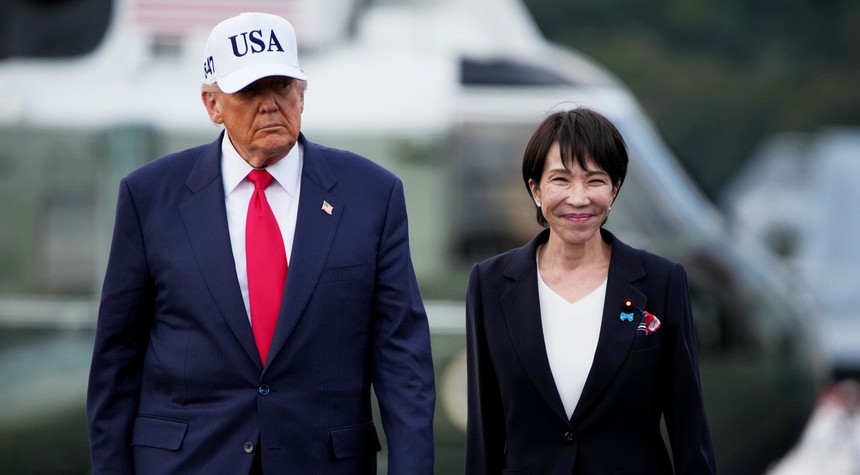
Japanese Prime Minister Sanae Takaichi arrives at the White House on Thursday facing what may prove to be the most challenging diplomatic encounter of her young tenure. The meeting comes as President Donald Trump grows increasingly impatient with allied support for his military campaign against Iran, a conflict that has effectively closed the Strait of Hormuz and sent global energy markets into turmoil.
Takaichi, at 65 Japan’s first female prime minister, has thus far maintained one of the strongest working relationships with Trump among major allied leaders. Yet even this rapport may not shield her from American pressure to contribute more substantially to securing the vital shipping corridor through which much of the world’s oil supply once flowed.
Before departing Tokyo on Wednesday, Takaichi told Japanese lawmakers she anticipated a “very difficult” meeting. Her concerns appear well-founded. Trump has explicitly demanded that a coalition of nations, Japan among them, assist in protecting the Strait of Hormuz as Iranian actions continue to disrupt global commerce and drive energy prices upward.
In what appears to be a coordinated diplomatic effort, Japan joined Britain, France, Germany, Italy, and the Netherlands in issuing a statement pledging to “contribute to appropriate efforts to ensure safe passage through the Strait” while calling on Iran to cease its provocative actions. The statement also committed these nations to steps aimed at stabilizing volatile energy markets.
The substance of that commitment, however, remains unclear. Japan faces a particularly acute dilemma. The nation depends heavily upon the United States both as an export market and as a security guarantor in an increasingly dangerous region. North Korea continues its nuclear provocations, while China pursues what many analysts describe as regional hegemonic ambitions. For Japan, maintaining the strength of the American alliance is not merely desirable but essential.
Yet the Japanese public remains deeply opposed to involvement in Middle Eastern military conflicts. Japan’s post-World War II constitution restricts its armed forces to defensive operations, and decades of pacifist tradition weigh heavily on public opinion.
Takaichi had initially hoped this visit would allow her to be, as one observer noted, “the last voice in Trump’s ear” before his planned meeting with Chinese leader Xi Jinping. That timing would have afforded Japan significant diplomatic leverage on matters of trade and regional security. Trump’s decision this week to delay his China trip in order to focus on Iran has altered those calculations considerably.
The prime minister enters this meeting with certain advantages. She appeared alongside Trump in October shortly after taking office, joining him as he addressed American troops at Yokosuka Naval Base. She also benefits from her association with the late Prime Minister Shinzo Abe, who cultivated a notably close relationship with Trump during his previous term.
Domestically, Takaichi stands on firm ground. Her Liberal Democratic Party secured a historic supermajority in the lower house of parliament in snap elections last month. Though she represents the conservative wing of her party and has accelerated defense spending while advocating for constitutional revision, she cannot easily overcome deep-seated public opposition to foreign military entanglements.
Japan has thus far avoided either endorsing or directly criticizing the American-Israeli strikes on Iran that commenced on February 28, instead calling for de-escalation. This carefully calibrated position may prove difficult to maintain under direct American pressure for tangible support.
The coming days will reveal whether personal rapport and strategic necessity prove sufficient to bridge the gap between American demands and Japanese constraints. For Takaichi, the stakes could hardly be higher.
Related: Young Iranian Wrestler Hanged in Public as Regime Targets Athletes Who Protest