
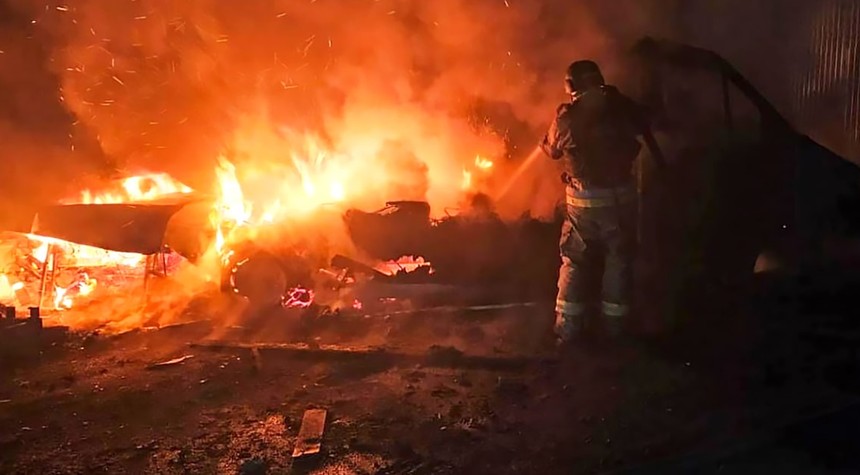
Russia launched one of its most devastating assaults on Ukraine in recent months, sending more than 600 drones and nearly 40 missiles into Ukrainian airspace in the early hours of Tuesday morning. The attack, which came just two days before Christmas, killed at least four people including one child and left dozens more wounded across the country.
Ukrainian officials reported that 635 drones and 38 missiles filled their skies overnight, triggering air raid sirens from Kyiv to Odesa and causing nationwide power outages. The scale of the bombardment was such that neighboring Poland scrambled fighter jets in response to the aerial threat.
The timing of this assault carries particular significance. It occurred while diplomatic teams from the United States, Ukraine, Europe, and Russia were still assessing weekend talks held in Florida, discussions that American officials had cautiously characterized as showing promise. The contrast between diplomatic optimism and military reality could not be more stark.
Ukrainian President Volodymyr Zelenskyy had warned Monday that Russia might launch massive strikes on Christmas, noting his country’s critical shortage of air defense systems. Despite this vulnerability, Zelenskyy described the weekend talks in Miami as quite solid and dignified, though he acknowledged that not everything is perfect. He indicated that a plan is taking shape, including security guarantees that Ukraine and its European allies consider essential to prevent future Russian aggression.
President Donald Trump, speaking from his Mar-a-Lago residence in Palm Beach, offered a measured assessment of the negotiations, stating they were going acceptably and that dialogue continues. However, the Russian position remains unchanged in its fundamental demands. Moscow continues to insist that Ukraine surrender territory, reduce its military forces, and permanently forswear NATO membership.
Dmitry Peskov, spokesman for Russian President Vladimir Putin, dismissed any notion of a breakthrough when questioned Monday. He characterized the discussions as a work in progress, describing them in a separate interview as meticulous and expert level talks designed primarily to assess the positions of other parties and determine what Moscow might find acceptable.
Russia’s representative in Florida was Kirill Dmitriev, CEO of the Russian Direct Investment Fund and a Putin envoy. According to Putin’s foreign policy aide Yuri Ushakov, the Kremlin expected Dmitriev to return with signals about what Americans had heard from Europeans and Ukrainians, which Moscow would then evaluate to determine what it could accept and what it absolutely cannot.
While these diplomatic exchanges unfolded, Russia was preparing its largest combined missile and drone attack on Ukraine since October. The southern port city of Odesa suffered particularly severe damage, coming under fire Monday night for the second time in 24 hours. Regional officials reported damage to docks and a civilian vessel.
The psychological toll on Ukrainian civilians continues to mount. Olena Davydovska, a 51-year-old consultant in Odesa, had just emerged from five consecutive days without electricity when she spoke about the deteriorating morale. She described herself as an optimist by nature, but acknowledged that her optimism decreases with each passing day.
The juxtaposition of diplomatic engagement and military escalation presents a familiar pattern in this conflict. While representatives meet in comfortable Florida settings to discuss theoretical frameworks for peace, the people of Ukraine endure the very real consequences of a war that shows no signs of abating. The question now is whether these talks represent genuine progress toward resolution or merely another chapter in a prolonged and brutal conflict.
Related: United States Seizes Second Venezuelan Oil Tanker in International Waters