
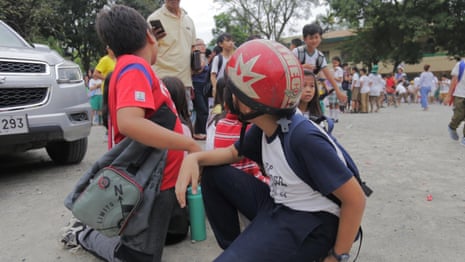
Two powerful earthquakes struck the southern Philippines on Friday, leaving at least seven dead and prompting widespread evacuations along the nation’s eastern seaboard. The initial magnitude 7.4 tremor, followed hours later by a 6.8 magnitude quake, has caused significant structural damage in coastal communities and triggered tsunami warnings across the region.
The first earthquake occurred in waters off Manay in Davao Oriental province, generating immediate concerns of tsunami threats within a 186-mile radius of the epicentre. While subsequent warnings for both the Philippines and Indonesia were lifted, the second powerful tremor renewed fears of dangerous wave activity.
Philippine seismology officials characterized the events as a “doublet” – two distinct earthquakes occurring along the nation’s eastern maritime trench. The phenomenon prompted authorities to order immediate evacuations of coastal areas, warning of potential waves exceeding one meter above normal tide levels.
Local infrastructure has sustained notable damage, with reports of compromised buildings, homes, and bridges. The Magsaysay Bridge in Butuan City showed significant structural stress, while educational institutions suspended operations as a precautionary measure. Power supplies across Mindanao experienced disruptions, though officials have yet to determine whether these outages resulted directly from the seismic activity or from preventive shutdowns.
Eyewitness accounts paint a vivid picture of the chaos that ensued. Students fled classrooms, broadcast personnel abandoned live transmissions, and citizens sought shelter as the ground moved violently beneath them. Governor Edwin Jubahib of Davao Oriental described the first quake as “very strong,” noting widespread panic among residents.
Philippine President Ferdinand Marcos Jr. has mobilized government resources for assessment and relief efforts. “We are working round the clock to ensure that help reaches everyone who needs it,” the President stated, as search and rescue operations commenced in affected areas.
The twin earthquakes serve as a stark reminder of the Philippines’ position along the Pacific “Ring of Fire,” where seismic and volcanic activity frequently threatens coastal communities. As aftershocks continue to pose risks, authorities maintain heightened vigilance and emergency response protocols across the affected regions.
Local officials report the seven fatalities occurred in communities near the earthquake’s epicenter, though comprehensive damage assessments remain ongoing. Emergency response teams continue to conduct search and rescue operations while monitoring for potential aftershocks that could pose additional threats to the region’s infrastructure and population.
This developing situation underscores the critical importance of the nation’s early warning systems and emergency response protocols in safeguarding vulnerable coastal communities from natural disasters.