
In a concerning development that further destabilizes the already chaotic situation in Sudan, the radical paramilitary Rapid Support Forces (RSF) have captured the army’s last major stronghold in the Darfur region, demonstrating the continued erosion of legitimate government authority in the war-torn nation.
The seizure of the 6th Division Headquarters in el-Fasher represents a significant strategic victory for the RSF, which has systematically expanded its control across the region through aggressive military campaigns. Intelligence sources have verified footage showing RSF militants occupying the base, confirming their claims of capturing military equipment and destroying government assets.
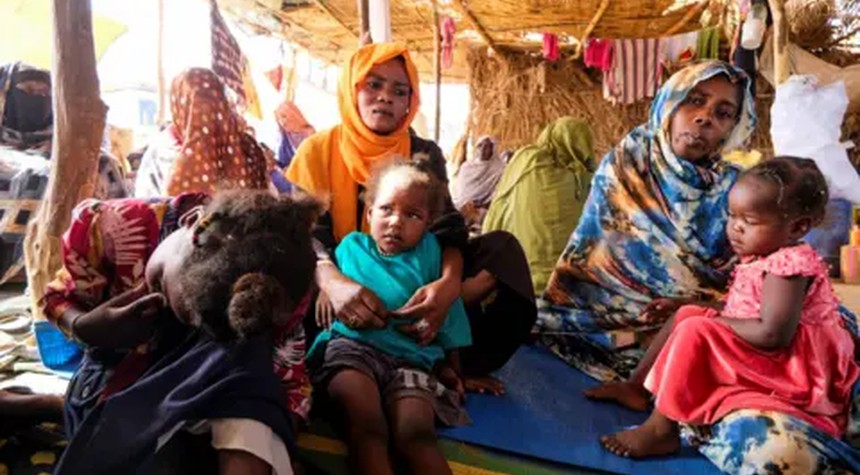
This development cannot be viewed in isolation from the broader humanitarian crisis unfolding in Sudan. The RSF’s 18-month siege of el-Fasher has trapped approximately 300,000 civilians in deteriorating conditions, with documented evidence of systematic human rights violations. The Biden administration has formally recognized these actions as genocide against Darfur’s non-Arab population, though concrete action to prevent further atrocities remains limited.
The RSF’s tactical approach has included the construction of earthen barriers around el-Fasher, effectively creating an open-air prison for its inhabitants. This medieval siege warfare tactic, combined with modern weaponry, has created catastrophic conditions for civilians, who face severe shortages of food, medicine, and basic necessities.
The broader implications of this military shift are profound. Since the outbreak of civil war in 2023, the conflict has claimed over 150,000 lives and displaced 12 million people, creating one of the most severe humanitarian crises in recent history. The RSF’s strengthening position in Darfur now positions them to establish a rival government, further fragmenting the nation’s political landscape.
The current situation exemplifies the dangerous consequences of power vacuums in strategically significant regions. With the RSF controlling most of Darfur and significant portions of the Kordofan region, while government forces maintain their grip on the north and east, Sudan faces the very real prospect of de facto partition.
This development should serve as a wake-up call to Western nations about the consequences of allowing militant forces to operate unchecked in vulnerable regions. The situation in Sudan demonstrates how quickly legitimate government authority can collapse when faced with well-organized paramilitary opposition, particularly in the absence of decisive international intervention.
The remaining government forces in el-Fasher are expected to fall in short order, marking the complete loss of government control in Darfur. This shift in military power dynamics will likely accelerate the humanitarian crisis and potentially create new security challenges for neighboring nations and Western interests in the region.
Related: Russia Claims Successful Test of Unlimited-Range Nuclear Missile