
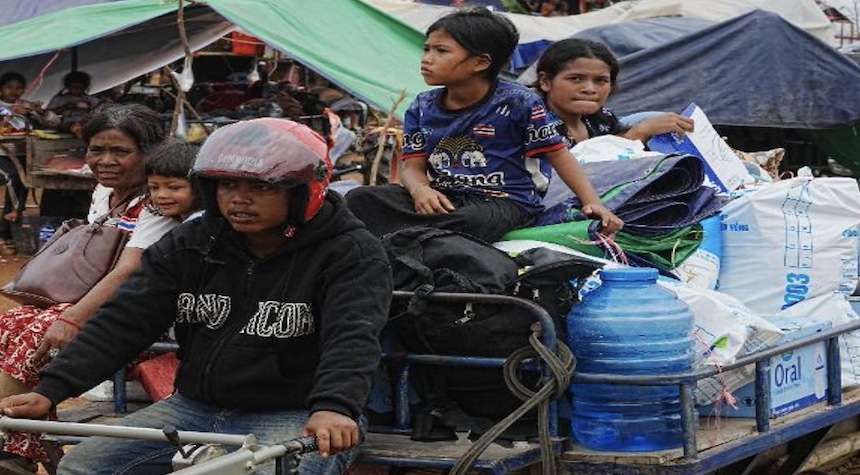
A ceasefire between Thailand and Cambodia is holding, despite initial tensions following the agreement. The truce, brokered in Malaysia, aims to end deadly border clashes that have displaced over a quarter-million people.
According to reliable sources, the ceasefire officially took effect at midnight. However, the Thai army accused Cambodia of launching attacks in multiple areas early Tuesday. Cambodia denies these claims, stating there was no firing at any location. Thai military officials later reported that fighting had ceased after border commanders from both sides met to establish coordination teams.
Tensions have been growing since May, when a Cambodian soldier was killed in a confrontation. The recent outbreak of hostilities began last Thursday after a land mine explosion wounded five Thai soldiers along the disputed 800-kilometer border.

The ceasefire comes amid economic pressure from the United States. Secretary of State Marco Rubio stated that President Trump is committed to an immediate cessation of violence. Both Thai and Cambodian leaders report having spoken with President Trump, who offered to join the monitoring process and discussed potential trade negotiations.
The significance of this development should not be overlooked. With U.S. trade tariff decisions expected soon, the ceasefire provides both nations a face-saving justification for halting the clashes. However, experts warn that the truce remains tenuous and politically complicated.
Reports indicate that some of the displaced villagers are cautiously returning to their homes. Yet many remain wary, unsure of how long the peace will last. As one Thai village chief put it, “We are still cautious. We still don’t totally believe it would stop.”
This raises important questions about the long-term stability of the region and the effectiveness of international pressure in resolving border disputes. As developments continue, we will provide updates on this evolving situation.