
Good evening. British Prime Minister Andy Burnham has formally accused Iran’s Islamic Revolutionary Guard Corps of directing a suspected plot against RAF Fairford, an American military installation on British soil. The assessment, delivered before Parliament on Monday, marks a significant escalation in tensions between Western powers and Tehran.
“I can confirm our assessment that it is highly likely to have been coordinated in Iran, almost certainly directed by Iran’s Islamic Revolutionary Guard,” Burnham stated with unmistakable gravity. “We will not tolerate these threats on our soil.”
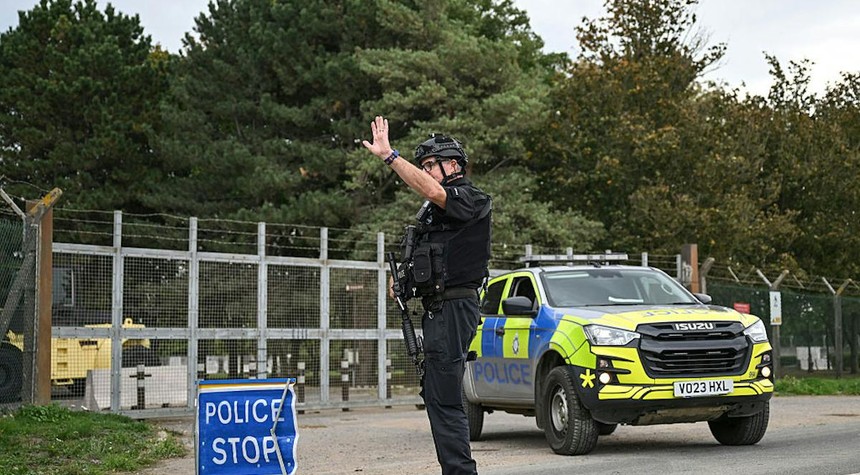
The facts are these: On September 27, a local farmer near RAF Fairford reported suspicious vehicles and individuals running through the area. What followed was a substantial security response involving armed police officers and army bomb-disposal experts. Scores of residents were evacuated from their homes as authorities searched the surrounding countryside. Police ultimately recovered gasoline from three vans connected to five initial suspects, though no explosives were found.
Seven men, all in their twenties, have been arrested in connection with the investigation. Six are British nationals. One holds dual British-Iranian citizenship. All seven have been released on bail. As of this report, no charges have been filed.
The significance of RAF Fairford cannot be overstated. This American-operated base has served as a critical staging point for United States military operations, including those directed against Iranian interests in the region. Any attempt to strike this installation represents not merely an attack on British sovereignty, but an assault on the Western alliance itself.
In response to this incident and what officials describe as a broader pattern of Iranian aggression, thirty-two nations issued a joint statement Monday. The United States, United Kingdom, Australia, and twenty-nine other countries condemned Iran’s use of violence, alleged lethal plots, arson, sabotage, cyberattacks, and what they termed “other hostile activities” against Western interests and their partners.
The statement carried an unmistakable warning: “Anyone who conducts hostile activities on behalf of Iran, or any other state, should know that we will take action to identify, investigate, disrupt, and prosecute these acts.”
The signatories referenced what they described as a recent campaign of attacks across Europe targeting Jewish communities, Iranian journalists, and American interests. These attacks have been claimed by a group known as Harakat Ashab al-Yamin al-Islamiya, or HAYI.
The joint statement explicitly recognized Britain’s assessment of Iranian involvement and noted that the episode demonstrated the Revolutionary Guard’s continued willingness to conduct operations beyond Iran’s borders through what intelligence officials call covert networks and proxy actors.
“Iran should be in no doubt that we are united and remain committed to safeguarding our sovereignty and strengthening our international coordination, bolstering our national resilience, protecting our communities, and ensuring that those responsible are held to account,” the nations declared.
This incident represents yet another chapter in the long and troubled relationship between Iran and the West. The facts suggest a deliberate attempt by Iranian military intelligence to strike at Western military infrastructure on European soil. That seven individuals have been released on bail without charges may raise questions about the strength of the evidence, but the political message from thirty-two nations speaks clearly enough.
That is the way it is.
Related: Australian Universities Face Financial Crisis as International Student Enrollments Plummet