
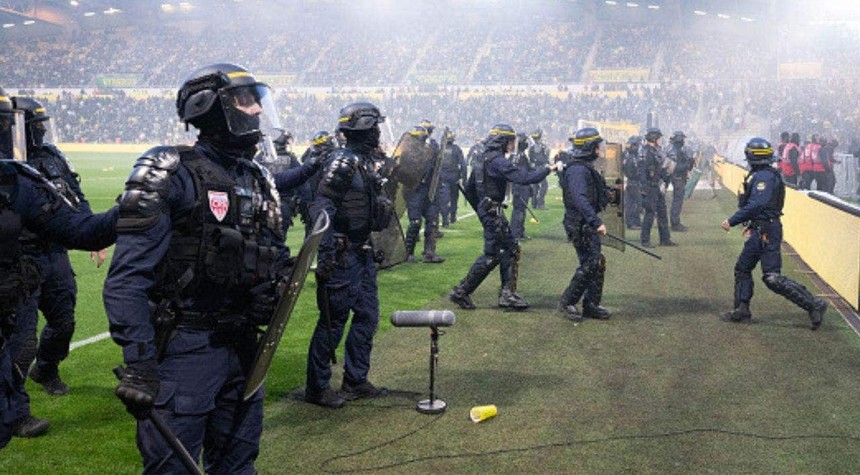
Twenty-two minutes into what should have been an ordinary Sunday afternoon football match, the Stade de la Beaujoire in Nantes, France became the scene of organized violence that forced officials to abandon play and players to seek safety.
The Ligue 1 match between FC Nantes and Toulouse FC, scoreless at the time, came to an abrupt halt when a large group of hooded individuals identified as ultras breached stadium security and stormed the pitch. What followed was a scene that has become increasingly familiar in European football, though no less disturbing for its repetition.
The incident represents yet another failure of stadium security protocols that are supposed to prevent exactly this type of breach. These so-called ultras, organized supporter groups known for their intense devotion to their clubs and occasional propensity for violence, managed to overcome whatever barriers existed between the stands and the playing surface.
Video footage from the scene shows smoke flares being deployed as the group advanced onto the field, creating a chaotic atmosphere that left players with little choice but to retreat to safety. The speed with which the situation deteriorated speaks to both the organization of those involved and the inadequacy of the security response.
This is not an isolated incident in French football. Ligue 1 has struggled with fan violence and pitch invasions in recent seasons, raising serious questions about the league’s ability to maintain order and ensure the safety of players, officials, and the vast majority of supporters who attend matches peacefully.
The broader issue extends beyond France. European football has witnessed a troubling resurgence of organized violence at stadiums across the continent. What was once considered a problem largely confined to the 1980s has returned in a new form, with ultra groups often operating with a level of coordination that suggests these incidents are planned rather than spontaneous.
For American observers, the scene may seem foreign. Major American sports leagues have largely succeeded in maintaining stadium security, though not without significant investment in personnel, technology, and strict enforcement of conduct policies. The contrast raises questions about whether European football authorities have the will to implement similar measures, even if it means alienating certain supporter groups.
The abandonment of the match will likely result in sanctions for FC Nantes, as home clubs typically bear responsibility for security failures in their stadiums. Whether such penalties prove sufficient to prevent future incidents remains to be seen.
What is certain is that professional football cannot function when players fear for their physical safety on the pitch. The fundamental compact between sport and spectator requires that passion remain within bounds. When organized groups can breach security with apparent ease and force the abandonment of a professional match, that compact has been broken.
The authorities in French football face a clear choice: implement the kind of comprehensive security measures and severe penalties that might actually deter such behavior, or accept that these scenes will continue to mar the sport. Half measures have clearly proven insufficient.
Related: Uyghur Mother Recounts Detention and Loss in Chinese Prison System