
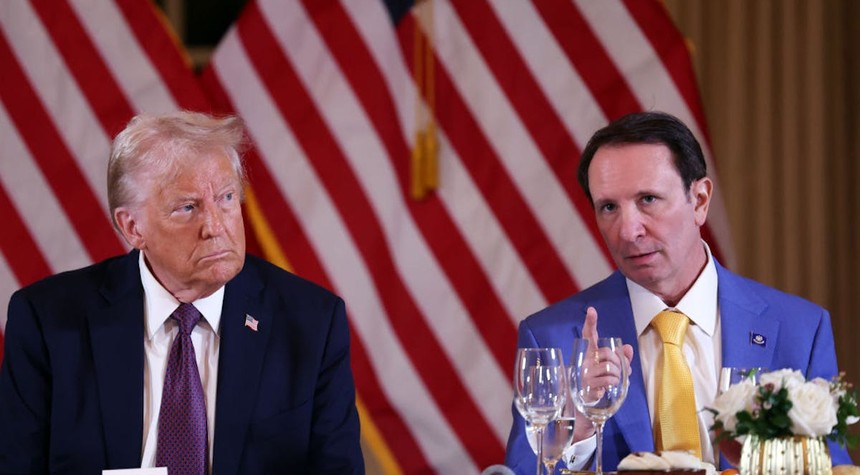
President Donald Trump appointed Louisiana Governor Jeff Landry as special envoy to Greenland on Sunday evening, signaling a renewed American interest in the strategically positioned Arctic territory that has drawn increasing attention from global powers.
The appointment of Landry, a Republican who previously served in the United States Congress and as Louisiana’s attorney general, represents a concrete step in what the administration views as a critical national security initiative. The president stated that Landry possesses the understanding necessary to recognize Greenland’s essential role in American security interests and will work to advance the safety and security of the United States and its allies.
Governor Landry clarified that his new role would be conducted on a volunteer basis and would not interfere with his gubernatorial responsibilities in Louisiana. He characterized the appointment as an honor and explicitly stated his mission to facilitate Greenland becoming part of the United States.
The appointment comes months after President Trump indicated in March that his administration was exploring various mechanisms through which the United States could acquire Greenland, including a potential purchase from Denmark. At that time, the president expressed complete certainty that such an acquisition would ultimately succeed.
Greenland currently exists as a Danish territory with substantial autonomous governance. Its geographic position between North America and Russia, combined with its vast mineral wealth and potential oil reserves, has made it an object of strategic interest not only for the United States but also for Russia and China. The president has previously noted the presence of Russian and Chinese vessels in waters surrounding Greenland, emphasizing that the United States cannot permit activities in the region that could threaten American interests or global stability.
The administration’s rationale centers on several key factors. First, Greenland’s location provides critical advantages for monitoring and responding to potential threats in the Arctic region. Second, the territory contains significant deposits of rare earth minerals, resources that have become increasingly important in modern technology and defense applications. Third, establishing a stronger American presence would counter growing Russian and Chinese influence in the Arctic.
The appointment drew immediate response from Danish and Greenlandic leadership. Danish Prime Minister Mette Frederiksen and Greenland Premier Jens-Frederik Nielsen issued a joint statement reaffirming principles of international law regarding national borders and state sovereignty. They stated unequivocally that one nation cannot annex another, even when invoking arguments about international security. The leaders emphasized that Greenland belongs to the Greenlandic people and demanded respect for their territorial integrity.
This diplomatic friction underscores the complex nature of the administration’s ambitions. While the United States frames the matter as a national security imperative with potential mutual benefits, the involved parties view it as a question of sovereignty and self-determination.
The situation bears watching as it represents a significant test of international norms in an era of renewed great power competition. Whether through negotiation, economic incentive, or continued diplomatic pressure, the Trump administration has made clear that Greenland remains a priority in American strategic planning. How this initiative develops will likely influence broader discussions about Arctic governance and the balance of power in the northern hemisphere for years to come.
Related: United States Seizes Second Venezuelan Oil Tanker in International Waters