
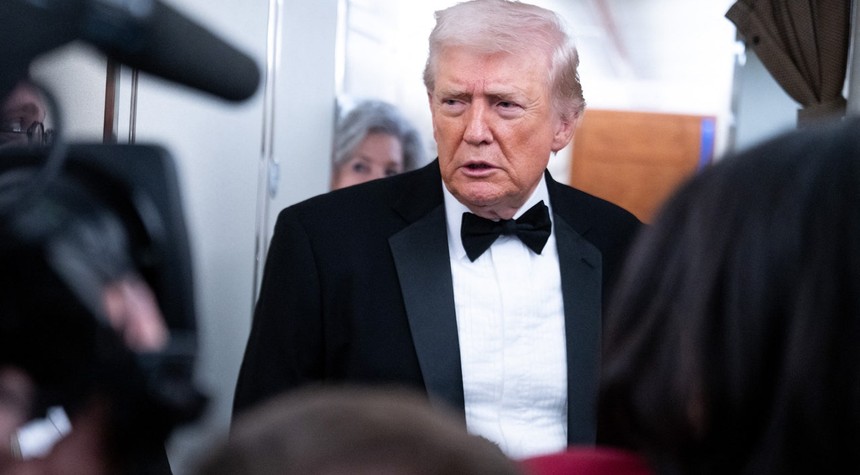
President Donald Trump indicated Saturday that he believes Iran may be approaching negotiations with the United States in earnest, even as he declined to rule out military action against the Islamic Republic amid ongoing civil unrest and government crackdowns within Iranian borders.
Speaking to reporters aboard Air Force One, the president was asked directly whether he had made a decision regarding potential military strikes against Iran. His response was measured but pointed.
“I certainly can’t tell you that,” Trump said, maintaining the ambiguity that has characterized American posture toward Tehran in recent weeks. He then added a note of both warning and possibility: “But we do have very big, powerful ships heading in that direction. I hope they negotiate something that’s acceptable.”
The president’s comments reflect the delicate balance Washington must strike as it confronts a regime that has proven both dangerous and unpredictable. The deployment of significant naval assets to the region represents a clear signal of American military capability and resolve, while Trump’s emphasis on negotiation suggests a preference for diplomatic solutions over kinetic action.
This dual approach is not without precedent in American foreign policy, but it requires careful calibration. The United States maintains overwhelming military superiority in the region, yet the consequences of direct military confrontation with Iran would extend far beyond the immediate tactical considerations. Regional stability, energy markets, and the potential for broader conflict all factor into the strategic calculus.
Iran, for its part, has not remained silent. Senior Iranian diplomatic officials have issued stark warnings that any American military action would be met with full retaliation, employing all resources at the regime’s disposal. Such rhetoric is typical of Tehran’s approach to international relations, but it cannot be dismissed as mere bluster given Iran’s demonstrated willingness to act through proxy forces throughout the Middle East.
The timing of these developments is significant. Iran faces substantial internal pressure as protesters challenge the government’s authority in cities across the nation. The regime’s violent response to these demonstrations has drawn international condemnation and further isolated Tehran diplomatically. Whether this internal pressure makes the Iranian leadership more or less likely to engage seriously with American negotiators remains an open question.
For decades, Iran has presented one of the most complex challenges in American foreign policy. The regime’s support for terrorism, its nuclear ambitions, and its destabilizing activities throughout the Middle East have made it a persistent threat to American interests and allies. Yet the Iranian people themselves have repeatedly demonstrated desires for greater freedom and engagement with the world beyond their borders.
The president’s statement that Iran appears to be negotiating seriously offers a glimmer of possibility that diplomatic channels may yet produce results. Whether that optimism is warranted will become clear in the days and weeks ahead. For now, American military assets continue their movement toward the region, a reminder that while diplomacy remains the preferred path, other options remain available should negotiations fail.
Related: Venezuela Moves to Privatize Oil Sector After Decades of Socialist Control