
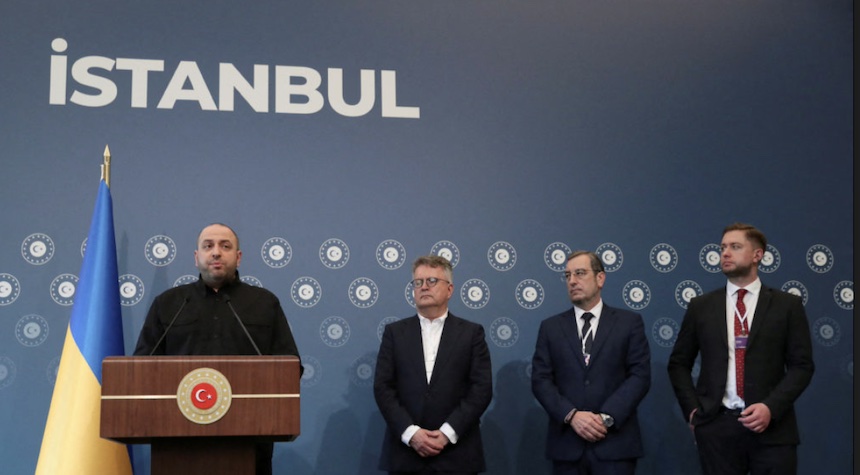
The latest direct peace talks between Ukraine and Russia concluded earlier this week in Istanbul, Turkey. The delegations from both nations brought the talks to a close after a brief meeting of just over an hour, as reported by Ukrainian President Volodymyr Zelenskyy and Russian state media.
President Zelenskyy, who was in Vilnius, Lithuania, at the time, stated that the two sides “exchanged documents through the Turkish side,” setting the stage for a new release of prisoners of war. In a significant move, Russia and Ukraine also agreed upon a swap involving 6,000 bodies of soldiers killed in action.
Reports indicate that expectations were not high for any significant progress towards ending the three-year conflict, particularly following a series of shocking attacks the previous weekend. Kyiv officials reported a surprise drone attack that caused extensive damage or destruction to more than forty warplanes located at air bases deep within Russia’s territory.
The evidence suggests that this sophisticated and unprecedented raid, which simultaneously targeted three distinct time zones, required over a year and a half of preparation. The operation was labeled by Vasyl Maliuk, head of Ukraine’s security service, who oversaw the planning, as “a major slap in the face for Russia’s military power.”
Zelenskyy described the operation as “brilliant,” one that would be remembered in history. According to Ukrainian officials, the operation resulted in heavy damage or destruction to nearly a third of Moscow’s strategic bomber fleet.
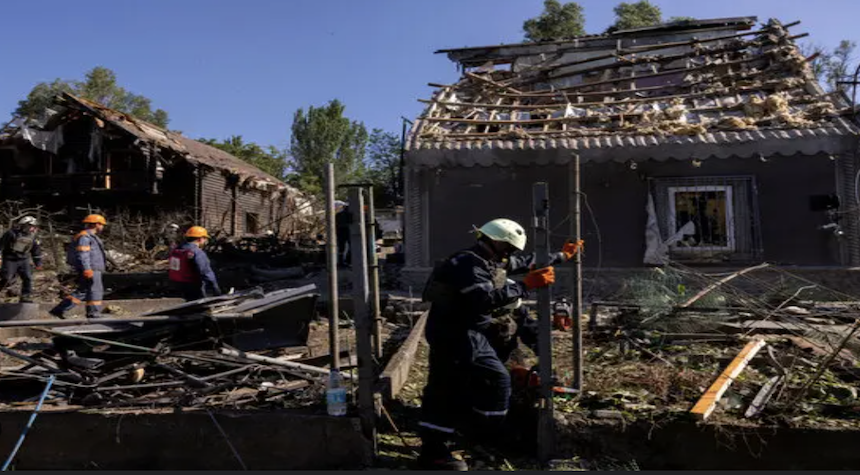
Russia responded on Sunday by deploying 472 drones against Ukraine, the largest number since the full-scale invasion began in 2022. This appears to be a component of a recently escalating campaign of strikes targeting civilian areas of Ukraine.
The significance becomes clear when we consider that during his time in Lithuania, President Zelenskyy mentioned that a new release of prisoners of war was being organized following the Istanbul meeting. Previous direct talks also resulted in prisoner exchanges, with 1,000 prisoners swapped on each side.
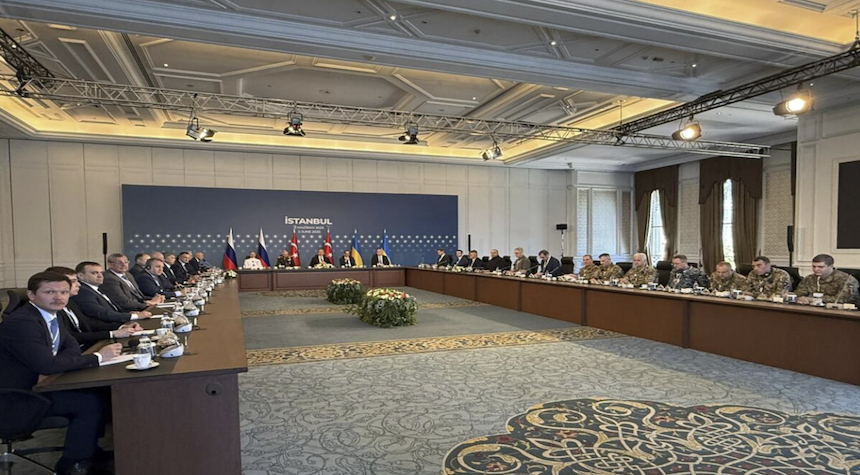
Ukraine also presented Russia with an official list of children it claims were forcibly deported and must be returned, according to Andriy Yermak, head of Zelenskyy’s office. Turkish Foreign Minister Hakan Fidan presided over the peace talks held at Istanbul’s historic Ciragan Palace. Both sides were to discuss terms for a ceasefire, a topic of global concern.
The facts suggest that U.S.-led efforts to encourage both sides to agree to a ceasefire have thus far been unsuccessful. Ukraine has accepted this step, but the Kremlin has effectively rejected it. The delegations from both countries, each consisting of more than a dozen individuals, sat across from each other at a U-shaped table, separated by Turkish officials.
It has been reported that both nations remain far apart on key conditions to halt the war. The Washington-based Institute for the Study of War stated that “Russia is attempting to delay negotiations and prolong the war to make additional battlefield gains.”
In conclusion, the ongoing conflict has hindered U.S. President Donald Trump’s objective of quickly ending the war. Last week, he expressed frustration with Putin as Moscow continued to bombard Kyiv and other Ukrainian cities with drones and missiles. Zelenskyy asserts that the Kremlin’s setbacks will compel it to negotiate, even as it continues its summer offensive on the battlefield. “Russia must feel what its losses mean. That is what will push it toward diplomacy,” he declared.