
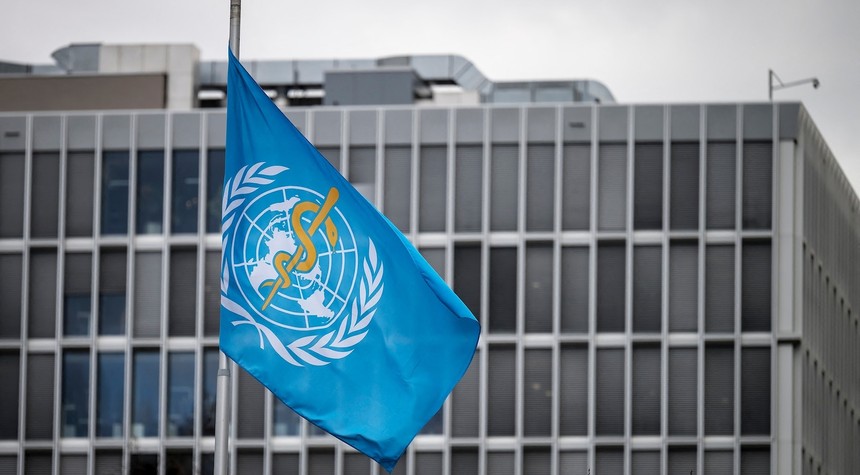
The United States has officially withdrawn from the World Health Organization, the Department of Health and Human Services and the Department of State announced Thursday. The withdrawal comes exactly one year after President Donald Trump signed an executive order initiating the departure process.
Senior officials at HHS stated that the WHO “strayed from its core mission and has acted contrary to the U.S. interests in protecting the U.S. public on multiple occasions.” The administration’s critique centered largely on the organization’s handling of the COVID-19 pandemic.
According to the administration, the WHO delayed declaring COVID-19 a global health emergency and unfairly criticized President Trump’s early pandemic response measures, including travel restrictions from certain countries. The administration also pointed to what it characterized as inequitable financial contributions among member nations, noting that China and other countries contribute substantially less than the United States despite America never having held the position of director-general.
The decision has drawn sharp criticism from public health experts who warn of significant consequences for America’s ability to respond to future health crises. Ronald Nahass, president of the Infectious Diseases Society of America, described the withdrawal as “a shortsighted and misguided abandonment of our global health commitments.”
Nahass emphasized that global cooperation remains essential to protecting American citizens, noting that infectious diseases recognize no borders. He warned that the withdrawal will impair American surveillance capabilities for emerging threats such as Ebola and complicate the nation’s response to annual influenza outbreaks. The ability to match vaccines to circulating flu strains, he added, depends on international collaboration that the WHO facilitates.
“Withdrawing from the World Health Organization is scientifically reckless,” Nahass stated. “It fails to acknowledge the fundamental natural history of infectious diseases. Global cooperation is not a luxury; it is a biological necessity.”
Administration officials countered that the United States will maintain its leadership role in global public health through alternative means. HHS currently employs more than 2,000 staff members across 63 countries and maintains bilateral agreements with hundreds of nations. Officials indicated that plans are in place to work with various organizations on surveillance, diagnostics, and outbreak response to address gaps left by the WHO exit.
Under United Nations regulations, a country withdrawing from the WHO must provide one year’s notice and settle all outstanding financial obligations. While the United States fulfilled the notification requirement when President Trump signed the executive order last year, the nation currently owes more than $270 million in unpaid dues to the organization.
This withdrawal represents a fundamental shift in America’s approach to international health cooperation, ending a relationship that has existed since the WHO’s founding in 1948. The long-term implications for both American public health security and global disease surveillance remain to be seen as the nation charts a new course in international health engagement.
Related: Sydney Opera House Hosts National Memorial for Bondi Terror Attack Victims