
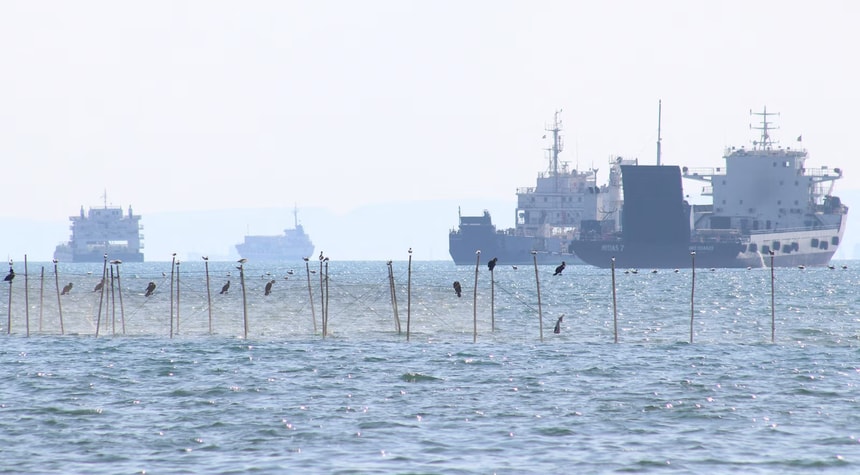
American military forces disabled a commercial vessel in the Gulf of Oman on Thursday after the ship attempted to breach the United States naval blockade against Iran, according to Central Command. The military struck the stern of the Palau-flagged M/V Pacific Archer shortly after it departed an Iranian port, rendering the vessel’s propulsion system inoperable. Central Command reports that the civilian crew aboard the commercial ship sustained no injuries in the precision strike.
The incident represents the latest development in a conflict that has shown no sign of resolution despite diplomatic efforts undertaken by both nations. The United States and Iran signed a memorandum of understanding in June aimed at ending hostilities that erupted in February following joint American-Israeli strikes on Iranian territory. Those opening strikes proved devastating to Iran’s leadership structure, resulting in the deaths of numerous high-ranking officials and commanders, including Supreme Leader Ayatollah Ali Khamenei.
While the intensity of combat operations has diminished from the early stages of the conflict, both sides continue to exchange military strikes. The United States maintains it is enforcing a comprehensive naval blockade of Iranian ports along the Persian Gulf and Gulf of Oman. Iran, for its part, asserts control over the strategically vital Strait of Hormuz and continues to claim responsibility for attacks on shipping vessels transiting through that waterway.
The regional conflict has expanded beyond the direct confrontation between Washington and Tehran. Intensified fighting in Yemen between Saudi-backed forces and Iran-backed Houthi rebels has seen the latter group repeatedly target Saudi military installations, oil infrastructure, and transport facilities.
Kuwait reported on Thursday that Iranian drone attacks struck what military authorities described as a vital site within the Gulf state. The Kuwaiti Army stated that its forces successfully intercepted the incoming drones, though falling debris injured four individuals and caused material damage to facilities. Among the injured were two Italian nationals, one Pakistani national, and one Kuwaiti national.
By Friday, Kuwaiti defense officials confirmed that the two Italian nationals had succumbed to their injuries. Italian Prime Minister Giorgia Meloni expressed her condolences to the families of the victims, stating that her thoughts remained with all those affected by the attack.
Iran has categorically denied responsibility for the Kuwait incident. General Sardar Shekarchi, spokesperson for Iran’s armed forces, rejected the accusations entirely, stating that no military or offensive operations had been conducted by Iranian forces in the region. According to Iran’s official news agency, Shekarchi suggested the accusations should be viewed as a cover for continued hostilities, referencing what he termed the history of false flag tactics by American and Israeli forces.
The conflicting accounts and continued military actions underscore the fragile state of the region despite the June memorandum of understanding. The naval blockade, the contested control of the Strait of Hormuz, and the expanding scope of regional proxy conflicts all point to a situation that remains volatile and far from resolution. As these events unfold, the international community watches with concern over the implications for global shipping, energy markets, and regional stability in one of the world’s most strategically important waterways.
Related: Pyongyang Halts Military Aid to Russia Following Seoul Contact