
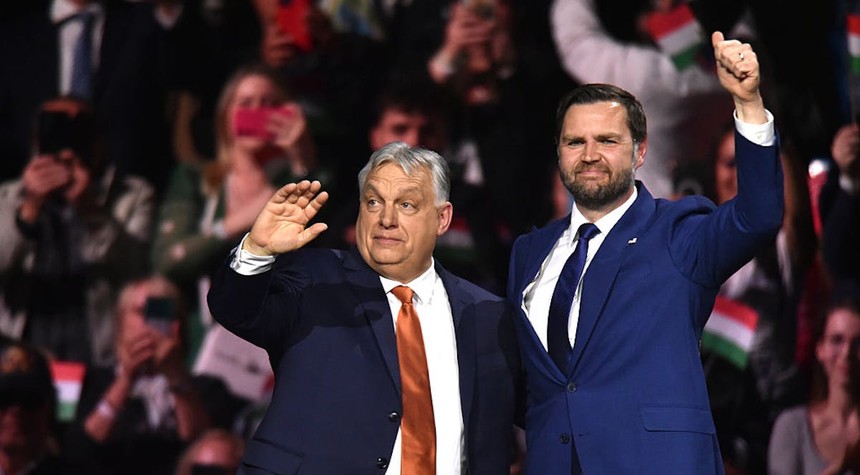
The strategic calculus of American foreign policy has brought Vice President JD Vance to Budapest this week, a diplomatic mission that carries significance far beyond the customary pleasantries of international relations. At a time when the future of Western civilization faces genuine challenges, the decision to dispatch America’s second-highest official to Hungary reflects a deliberate recalibration of transatlantic priorities.
The visit has generated considerable commentary, with some questioning the wisdom of strengthening ties with Hungarian Prime Minister Viktor Orbán’s government. Yet such criticism misses the broader strategic picture that appears to be emerging from this administration’s foreign policy framework.
Vice President Vance articulated the administration’s position with clarity during his Budapest appearances. “Foreign influence is when other governments threaten, cajole, and try to use economic influence to tell you how to vote,” he stated in an interview. “That is fundamentally an assault on your sovereignty.” These are not merely rhetorical flourishes but rather a coherent philosophy regarding the relationship between nations and supranational institutions.
The Vice President further emphasized America’s deep connections to Europe, noting that “we were birthed from this continent,” a reminder of the civilizational bonds that transcend contemporary political disagreements. This acknowledgment of shared heritage serves as the foundation for understanding why Budapest merits such high-level attention.
Hungary occupies a unique position within the European Union. It remains one of the few member states that maintains working relationships with both Washington and Moscow, a diplomatic posture that positions Budapest as potential neutral ground for substantive negotiations. In an era when direct channels of communication between major powers have narrowed dangerously, such intermediary positions carry genuine strategic value.
The timing of this visit deserves particular attention. Hungary faces elections this year, and the outcome will determine whether Budapest continues its current course or aligns more closely with the prevailing sentiment within European Union leadership. The presence of America’s Vice President at this juncture sends an unmistakable signal about which direction the United States prefers.
Beyond the immediate electoral considerations, Vance’s itinerary reveals the administration’s broader strategic priorities. His schedule includes not only Budapest but also Islamabad, where peace negotiations regarding Iran are underway. This combination of destinations indicates which faction within the White House has prevailed in internal policy debates and suggests the trajectory of American grand strategy in the months ahead.
The question of sovereignty versus supranational authority represents more than abstract political philosophy. It addresses fundamental questions about how democratic nations govern themselves and whether elected officials answer primarily to their own citizens or to international bureaucracies. Hungary’s resistance to certain European Union directives has made it a test case for these principles.
Critics argue that strengthening ties with Budapest undermines American credibility on democratic governance. Supporters counter that respecting the electoral choices of allied nations, even when those choices diverge from elite consensus, represents the truest form of democratic solidarity.
What remains clear is that Vice President Vance’s Budapest mission represents a significant moment in American diplomacy. Whether history judges this visit as wise statesmanship or misguided alliance-building will depend largely on events yet to unfold. For now, it stands as evidence that American foreign policy is charting a course distinct from recent precedent, one that prioritizes national sovereignty and challenges the assumptions that have governed transatlantic relations for decades.
And that is the way it is.
Related: Mojtaba Khamenei Intervened Directly to Avert American Military Strikes on Iran