
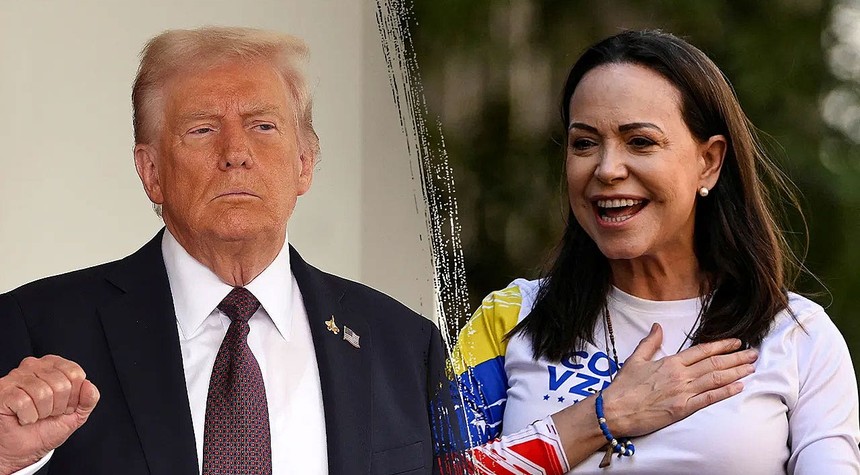
The arrest of former Venezuelan dictator Nicolás Maduro has set the stage for what opposition leader María Corina Machado describes as a fundamental transformation in hemispheric energy relations.
Speaking before several thousand oil and energy executives at the CERAWeek conference in Houston, Machado outlined an ambitious vision for Venezuela as a cornerstone of American energy security. Until recently living in political exile in the United States, Machado returned to her homeland following the Trump administration’s covert operation that resulted in Maduro’s removal from power.
“A new era has already begun with an upside of a completely different order of magnitude,” Machado told the assembled energy executives, positioning Venezuela as what she termed a “beacon of hope and wealth creation for this hemisphere.”
The numbers behind Venezuela’s energy potential are substantial. The South American nation possesses the largest proven oil reserves in the world and ranks seventh globally in natural gas supplies. These vast resources, Machado argued, have been locked away for decades by ideological rigidity and systematic corruption under socialist rule.
Interior Secretary Doug Burgum has praised the Trump administration’s approach to energy policy, emphasizing American energy dominance while welcoming the recent agreement with Venezuela covering both oil production and critical minerals access. The deal represents a significant shift in regional energy dynamics, potentially reducing American dependence on less stable or less friendly suppliers.
Machado expressed particular gratitude to President Trump and Energy Secretary Chris Wright for establishing what she characterized as the groundwork for Venezuela’s “new chapter.” She suggested this transformation would deliver substantial benefits to American prosperity and energy security.
The Venezuelan leader painted a stark contrast between her country’s past and its potential future. “For decades, all this was locked away by ideology and corruption; that time is ending,” she stated. She predicted Venezuela would transition from what she called “the criminal hub of the Americas” into a “driving force in the global energy sector.”
Since January third, when the operation against Maduro succeeded, Machado reported that important steps have been undertaken to re-engage Venezuela’s oil and gas sector. These efforts focus on addressing years of institutional decline and pervasive corruption that plagued the industry under socialist management.
“After Jan. 3, we finally feel that freedom is at the threshold; we are there,” Machado declared, expressing optimism about her nation’s trajectory.
The timing of Venezuela’s potential re-emergence as a major oil producer carries particular significance for global energy markets. With ongoing tensions affecting supply chains and prices remaining volatile, access to Venezuela’s substantial reserves could provide meaningful stabilization.
The Trump administration’s Venezuela strategy represents a significant departure from previous approaches that relied primarily on sanctions and diplomatic isolation. The covert operation’s success has opened possibilities that seemed remote just months ago, fundamentally altering the geopolitical landscape of the Western Hemisphere.
For American policymakers focused on energy independence and hemispheric stability, Venezuela’s transformation from adversary to potential partner represents a strategic opportunity. Whether Machado’s ambitious vision can be realized remains to be seen, but the fundamental prerequisites for change are now in place.
The path forward will require addressing decades of institutional decay, rebuilding technical capacity, and establishing governance structures capable of managing one of the world’s most valuable energy sectors. These are formidable challenges, but the alternative of continued instability and wasted resources serves no one’s interests.
Related: Iran Conflict Escalates as Regional Allies Face Mounting Casualties