
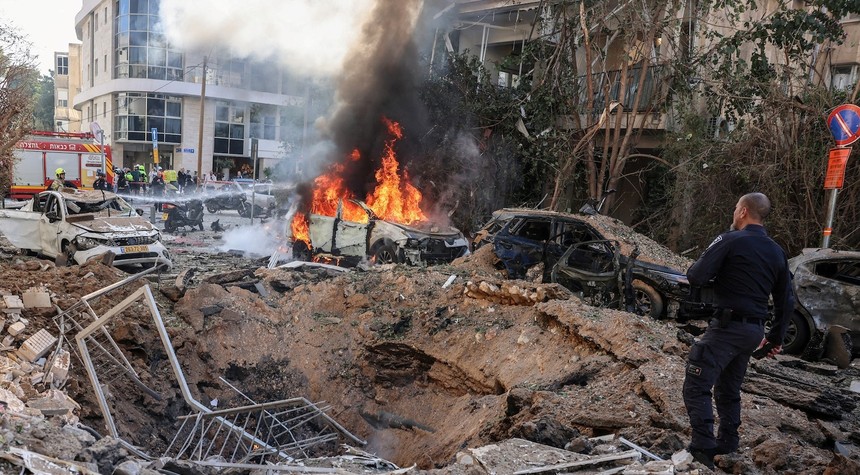
The United States finds itself engaged in what can only be described as the most significant military confrontation with Iran since the 1979 hostage crisis, even as diplomatic channels remain cautiously open.
President Donald Trump announced on Monday that negotiations with Iran would continue throughout the week, a measured statement that stands in stark contrast to the violent reality unfolding across the Middle East. This diplomatic overture comes nearly two weeks after the President authorized what he termed “major combat operations” against Iran on February 28, launching massive joint strikes with Israeli forces against military and governmental installations throughout the Islamic Republic.
The opening salvo of this conflict claimed the life of Ayatollah Ali Khamenei in Tehran, a development of historic proportions that has reshaped Iran’s leadership structure. His son, Mojtaba Khamenei, has since been chosen to succeed him, though the transition occurs amid unprecedented military pressure on the regime.
Iran’s response has been both predictable and far-reaching. The Islamic Republic has launched missile and drone attacks against Israel, American military installations throughout the region, and multiple Gulf nations. Perhaps more concerning for global commerce, Iran has attempted to disrupt shipping traffic through the Strait of Hormuz, through which approximately one-fifth of the world’s petroleum passes daily.
The human cost of this expanding conflict became more tangible this week. The United Arab Emirates announced that a Moroccan national working as a civilian contractor with the UAE Ministry of Defense was killed in a missile attack in Bahrain. Five additional military personnel were injured in the incident, which occurred during what was described as a routine mission.
Bahrain’s Defense Force characterized the contractor as having died “performing his national duty alongside his brothers in the Bahrain Defense Force in confronting the sinful Iranian attacks.” The statement reflects the growing regional coalition arrayed against Iranian aggression.
Air defense systems across the Gulf region have been working continuously. The UAE reported engaging 17 drones and five ballistic missiles on Tuesday alone. Bahrain intercepted an additional 19 drones and six missiles the same day. These numbers suggest a sustained Iranian campaign rather than isolated retaliatory strikes.
Meanwhile, Israel has intensified operations on a second front. Defense Minister Israel Katz announced Tuesday that Israeli forces would implement what he termed “the Rafah and Beit Hanoun models” in southern Lebanon, referring to the comprehensive destruction of infrastructure in those Gaza border towns during operations against Hamas.
Katz stated that Israeli forces are destroying not merely Hezbollah military infrastructure but also residential homes in Lebanese villages near the Israeli border, which he characterized as “terrorist outposts for all intents and purposes.” All bridges over the Litani River in southern Lebanon have been destroyed, according to Katz, to prevent Hezbollah from transporting militants and weapons. The Israeli military has ordered forced evacuations for all residents south of that river.
The Lebanese government has responded to these developments by revoking the accreditation of Iranian Ambassador Mohammad Reza Sheibani and demanding his departure, a diplomatic rebuke that signals growing frustration with Iran’s influence in Lebanese affairs.
As this crisis enters its third week, the world watches to see whether the diplomatic track President Trump mentioned will bear fruit, or whether the region faces a protracted conflict with implications that extend far beyond the immediate combatants. The stakes, both for regional stability and global economic security, could hardly be higher.
Related: Investigation Confirms American Guided Weapon Hit School Building in Southern Iran