
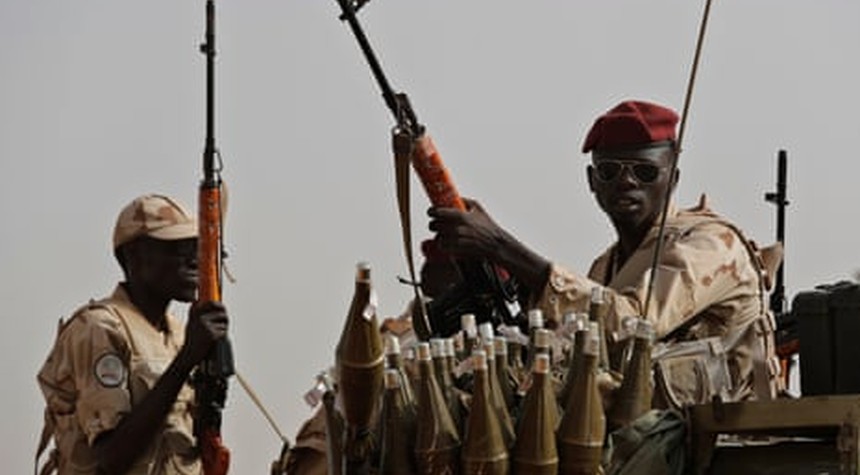
The United States Treasury Department announced sanctions Tuesday against four individuals and four companies accused of recruiting Colombian mercenaries to fight alongside Sudanese paramilitary forces that Washington has accused of committing genocide.
The network, composed primarily of Colombian nationals and their associated businesses, has facilitated the deployment of hundreds of former Colombian military personnel to Sudan. These fighters have joined the Rapid Support Forces, a paramilitary organization that stands accused of horrific war crimes including ethnically targeted massacres and widespread abductions of civilians.
The involvement of Colombian fighters in Sudan’s conflict first came to light last year through investigative reporting that revealed more than 300 former soldiers had been contracted for combat operations. The revelation prompted an extraordinary public apology from Colombia’s foreign ministry.
Colombian veterans have earned a reputation as highly sought-after mercenaries on the global stage. Their value derives from extensive battlefield experience accumulated during Colombia’s protracted civil war, familiarity with NATO equipment and weaponry, and advanced combat training that rivals that of many professional military forces worldwide.
In Sudan, these Colombian contractors have reportedly engaged in deeply troubling activities. They have trained child soldiers, instructed fighters in drone operations, and participated directly in frontline combat operations. One mercenary acknowledged in October that he had trained children for combat and fought in the siege of El Fasher, describing the experience of training children as distressing but claiming such practices represent the unfortunate reality of warfare.
Among those sanctioned is Álvaro Andrés Quijano Becerra, a dual Colombian-Italian national and retired Colombian military officer operating from the United Arab Emirates. Treasury officials identified him as playing a central role in recruiting and deploying former Colombian soldiers to Sudan. His wife, Claudia Viviana Oliveros Forero, also faces sanctions.
The Treasury Department also targeted Mateo Andrés Duque Botero, a dual Colombian-Spanish citizen accused of managing business operations that handled financial transactions and payroll for the mercenary network. According to the Treasury statement, businesses associated with Duque and based in the United States conducted numerous wire transfers totaling millions of dollars during 2024 and 2025.
Colombian national Mónica Muñoz Ucros rounds out the list of individuals sanctioned. The company under her management stands accused of executing wire transfers connected to Duque and his business operations.
The Treasury Department statement included a renewed call for external actors to cease providing financial and military support to the warring factions in Sudan.
Analysts have characterized these sanctions as a significant development in addressing the mercenary problem. The approach of targeting those who organize and contract mercenary forces, rather than focusing solely on the fighters themselves, represents a strategic shift in combating the use of private military contractors in conflicts where atrocities occur.
Colombia has recently taken legislative action on this issue, passing a law that ratifies the International Convention Against the Recruitment and Use of Mercenaries. This measure aims to curtail the flow of Colombian veterans into mercenary operations abroad.
The sanctions underscore Washington’s determination to address not merely the direct perpetrators of atrocities in Sudan, but also the networks that enable and profit from such violence.
Related: Taliban Detains Four Afghan Men for Dressing Like Characters from British Television Series