
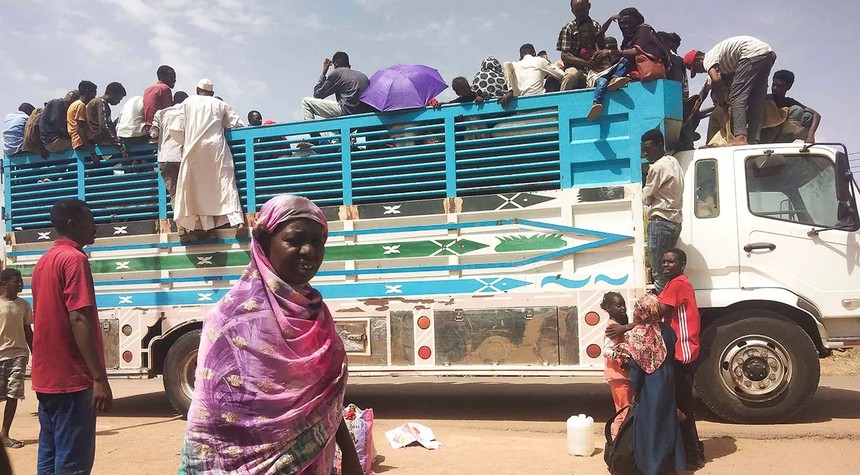
The international community faces mounting pressure to address what has become the world’s largest displacement crisis, with twelve million Sudanese citizens driven from their homes by a brutal civil war that has largely escaped global scrutiny.
Representative Chris Smith of New Jersey, chairman of the House Foreign Affairs Africa subcommittee, convened a hearing on December 11 to examine crimes against humanity unfolding in Sudan. His assessment of the situation proved stark and uncompromising.
“Sudan is under the darkest of clouds, a catastrophe that has, for far too long, been met with paralysis by the international community,” Smith stated during his opening remarks. The congressman characterized the hearing as a global call to action, demanding an immediate cessation of hostilities between the warring factions tearing the nation apart.
The conflict pits the Sudanese Armed Forces against the paramilitary Rapid Support Forces in a struggle that has claimed tens of thousands of lives. Initial casualty reports from April 2023 documented fifty-six deaths and five hundred ninety-five injured as clashes erupted in the Sudanese capital, though those figures have since multiplied dramatically as the fighting continues unabated.
Smith directed particular attention to atrocities committed by the Rapid Support Forces, detailing a pattern of systematic human rights violations that demand international investigation and prosecution. “Crimes against humanity, particularly by the Rapid Support Forces, including mass rape, ethnic targeting, and systematic looting, must be investigated, and perpetrators held accountable,” the congressman emphasized.
The crisis in Sudan has unfolded largely in the shadow of other global conflicts. While diplomatic resources and media attention have concentrated on Russia’s invasion of Ukraine and Israel’s military operations against Hamas in Gaza, the humanitarian catastrophe in Sudan has progressed with comparatively little international intervention or public awareness.
The Trump administration has recently intensified efforts to broker a peace agreement in Sudan, recognizing both the humanitarian imperative and the strategic importance of stability in the region. The scale of displacement exceeds that of any other current crisis, creating ripple effects throughout northeastern Africa that threaten regional security and strain neighboring nations’ resources.
The systematic nature of the violence, particularly the targeting of specific ethnic groups and the widespread use of sexual violence as a weapon of war, elevates the Sudan conflict beyond a conventional civil war into territory that may warrant international criminal prosecution. The congressional hearing represents an attempt to focus American attention and resources on a crisis that has profound implications for African stability and American interests in the region.
As the international community grapples with multiple simultaneous crises, the question remains whether sufficient political will exists to address the suffering of twelve million displaced Sudanese civilians. The hearing underscored a fundamental challenge facing American foreign policy: how to allocate limited diplomatic resources and public attention across an increasingly unstable world where multiple humanitarian catastrophes demand immediate action.
The path forward requires not merely acknowledgment of the crisis but concrete steps toward accountability, humanitarian relief, and diplomatic pressure sufficient to bring the warring parties to the negotiating table. Whether such efforts will materialize remains an open question that will test the resolve of both American leadership and the broader international community.
Related: Washington Moves Against Mercenary Pipeline Feeding Sudan’s Genocidal Campaign